
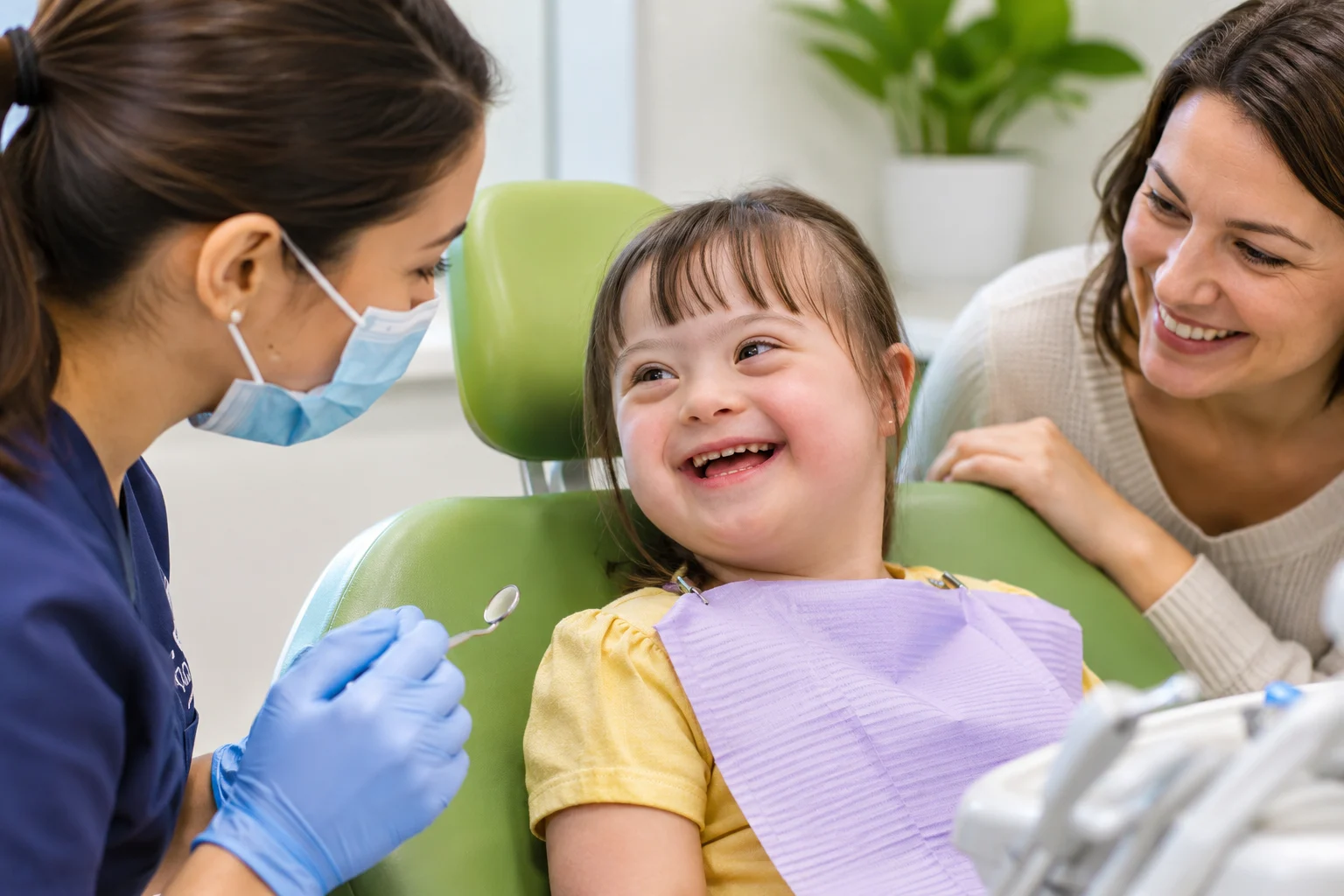
If you are the parent of a child with Down syndrome, you already know that every child is wonderfully different. You also know that you spend a lot of time sorting through information, appointments, and advice. Dental care is one more piece of that picture, and it is a piece where a little preparation can go a long way.
The short answer: children with Down syndrome need the same dental care as any child, with a few extra things worth knowing, such as later tooth eruption, bite differences, and gum health. An early first visit, a prepared child, and a calm daily routine make the biggest difference. This guide covers what parents may notice, how to prepare for visits, and simple habits for home. For a broader look, see our guide to dental care for kids with special needs. It is general information, and your child's dentist and care team know your child best.
Why Does Dental Care Matter for Children With Down Syndrome?
Healthy teeth and gums matter for every child. They help with eating, speaking, comfort, and confidence. For children with Down syndrome, there are some oral health patterns that dental professionals often talk about, which is why regular dental care is especially worthwhile. These patterns do not apply to every child, and many children with Down syndrome have smooth, uncomplicated dental experiences.
Knowing what may come up helps you feel prepared, not worried. The goal is simply to give your child the support that fits their mouth, their needs, and their personality.
What Dental Differences Are More Common in Children With Down Syndrome?
Every child is an individual, and not all of these will apply. Here are some things dentists often mention.
- Delayed tooth eruption: Baby teeth and permanent teeth may come in later than the typical timeline, and sometimes in a different order. This is quite common and often not a concern on its own.
- Differences in tooth size or shape: Some children have smaller teeth, or teeth with a slightly different shape.
- Missing or extra teeth: Some children have fewer teeth than expected, while others may have extra ones. X-rays can help the dentist see what is happening beneath the gums.
- Crowding or bite differences: A smaller upper jaw can sometimes lead to crowding or a bite that does not line up in the usual way.
- Gum health: Some children may be more prone to gum inflammation, which makes consistent cleaning especially helpful.
- Mouth breathing and tongue position: Some children breathe through the mouth or have a tongue that rests forward, which can affect dryness and how teeth and gums feel.
- Teeth grinding: Some children grind their teeth, which a dentist can monitor.
If you notice any of these, it is simply good information to share with your pediatric dentist, who can tailor care to your child.
When Should a Child With Down Syndrome First See a Dentist?
Dental organizations generally recommend a first dental visit by the child's first birthday, or within about six months of the first tooth appearing. That recommendation applies to children with Down syndrome as well. Starting early gives your child a chance to get comfortable in the dental setting, and it gives you a chance to ask questions and learn gentle cleaning techniques.
If your child is older and has not been to a dentist yet, it is never too late to begin. A relaxed introductory visit, even just to meet the team and look around, can be a good first step.
How Can You Prepare Your Child for a Dental Visit?
Preparation is often one of the most helpful tools, and it can be tailored to how your child learns best. Our guide to preparing a child with special needs for the dentist goes deeper on many of these ideas. Here are some that many families find useful.
- Use pictures or a visual schedule: A simple set of photos or drawings showing each step, from arriving to sitting in the chair to leaving, can help your child know what to expect.
- Read a story or watch a video: Child-friendly books and videos about visiting the dentist can make the experience feel familiar.
- Practice at home: Play dentist with a favorite toy, count teeth with a toothbrush, and practice opening wide.
- Visit the office first: A short, low-pressure visit to meet the team and see the room, sometimes called a desensitization visit, can build comfort.
- Bring comfort items: A favorite toy, blanket, or headphones can be reassuring.
- Pick a good time of day: Choose a time when your child is typically rested, fed, and in a good mood.
- Use simple, positive language: Short, calm phrases tend to work well.
Move at your child's pace. Some children need a few small visits before they are ready for a full exam, and that is perfectly okay.
What Should You Tell the Dentist Before the Appointment?
You are the expert on your child, and sharing information helps the dental team plan a smooth visit. A practice that offers special needs dental care will welcome this kind of detail. Consider letting the office know about the following.
- Your child's health history: This includes any heart conditions, other medical needs, and medications. If your child has a heart condition, your child's cardiologist and dentist can decide together whether any special precautions are needed.
- Neck or spine concerns: Some children with Down syndrome have a condition affecting the upper neck, and your child's doctor may have given guidance on positioning. Sharing this helps the dentist keep your child comfortable and supported.
- Communication style: Let the team know how your child communicates best, whether through words, signs, pictures, or gestures.
- Sensory preferences: Mention sensitivities to sound, light, touch, taste, or smell, and what tends to help. It makes a sensory-friendly dental visit much easier to plan.
- What works and what does not: Share calming strategies, favorite topics, and anything that tends to cause stress.
A short conversation before the visit, or notes you send ahead, can make a real difference.
How Can You Make Brushing and Flossing Easier at Home?
Daily care at home is the foundation of healthy teeth, and a few small adjustments can make it more comfortable.
- Brush twice a day: Use a soft toothbrush and a toothpaste amount suited to your child's age. Your dentist can tell you what is appropriate.
- Help your child brush: Many children need help well beyond the early years, so brushing together, or taking turns, is a good approach.
- Try an adapted toothbrush: Brushes with larger handles, angled heads, or electric options may be easier for some children to hold and tolerate.
- Pick a comfortable position: Sitting in a supportive chair, or sitting in your lap while you brush from behind, may help your child feel steady.
- Be gentle with the gums: If gums look red or swollen, keep cleaning softly and let your dentist know.
- Clean between teeth: Floss holders or soft picks can make this easier.
- Build a routine: Brushing at the same times each day, with a familiar song or sequence, can help it feel predictable.
- Celebrate small wins: Praise and encouragement go a long way.
Imperfect brushing still helps. A calm routine you can keep up matters more than getting everything right every time.
What Can Parents Do About Diet, Dry Mouth, and Healthy Habits?
Food and drink habits affect teeth for every child. Offering water between meals, limiting sugary drinks and sticky snacks, and avoiding bedtime bottles filled with anything other than water are helpful starting points. If your child breathes through the mouth or has a dry mouth, ask your dentist for ideas to support comfort. Regular checkups, usually every six months or as your dentist recommends, allow small concerns to be caught early.
Looking for a Pediatric Dentist in Marlboro, NJ? Reach Out to Polished Pediatric Dentistry
Every child deserves dental care that feels respectful, patient, and tailored to them. At Polished Pediatric Dentistry, Dr. Dinah Jammal and our team are happy to listen to your questions, learn about your child, and talk through dental care for children with Down syndrome at a pace that feels comfortable for your family. If you are looking for a pediatric dentist in Marlboro, NJ, we welcome families from Marlboro, Manalapan, Colts Neck, Matawan, Holmdel, Old Bridge, East Brunswick, Howell, Morganville, and throughout Monmouth County, NJ. Call (732) 226-1995 to ask your questions or schedule a visit.
Dental Care for Children With Down Syndrome FAQs
When should a child with Down syndrome first see a dentist?
The general recommendation is by the first birthday, or within about six months of the first tooth appearing. If your child is older and has not been yet, it is never too late to start.
Do children with Down syndrome need to see a dentist more often?
Some children may benefit from more frequent visits, particularly if gum health needs attention. Your pediatric dentist can suggest a schedule based on your child's needs.
Why are my child's teeth coming in late?
Delayed eruption is common in children with Down syndrome, and the timing can vary a lot. If you are unsure, your dentist can take a look and explain what is typical for your child.
Is it normal for a child with Down syndrome to have crowded teeth?
Crowding and bite differences can happen, partly because of jaw size. A dentist or orthodontist can monitor development and discuss options if they are needed.
What if my child becomes anxious or overwhelmed at the dentist?
Preparation, short visits, familiar comfort items, and a patient team can help. Your dentist can also talk with you about additional support options that may be appropriate.
Should I tell the dentist about my child's medical history?
Yes. Sharing health history, medications, and any guidance from your child's doctors helps the dental team provide safe, thoughtful care.
Dental Care for Kids With Down Syndrome: What to Expect
Dental care for children with Down syndrome, made simpler. See what parents may notice, how to prepare for visits, and easy brushing tips.

Toddler Refuses to Brush Their Teeth? Try These Calm Fixes
Toddler refusing to brush their teeth? Try these gentle, practical ideas, from turning brushing into play to building a simple, steady routine.
Does Dental Insurance Cover Sedation for Kids?
Does dental insurance cover sedation for kids? See how coverage usually works, what to ask your insurer, and ways to plan for the cost.