
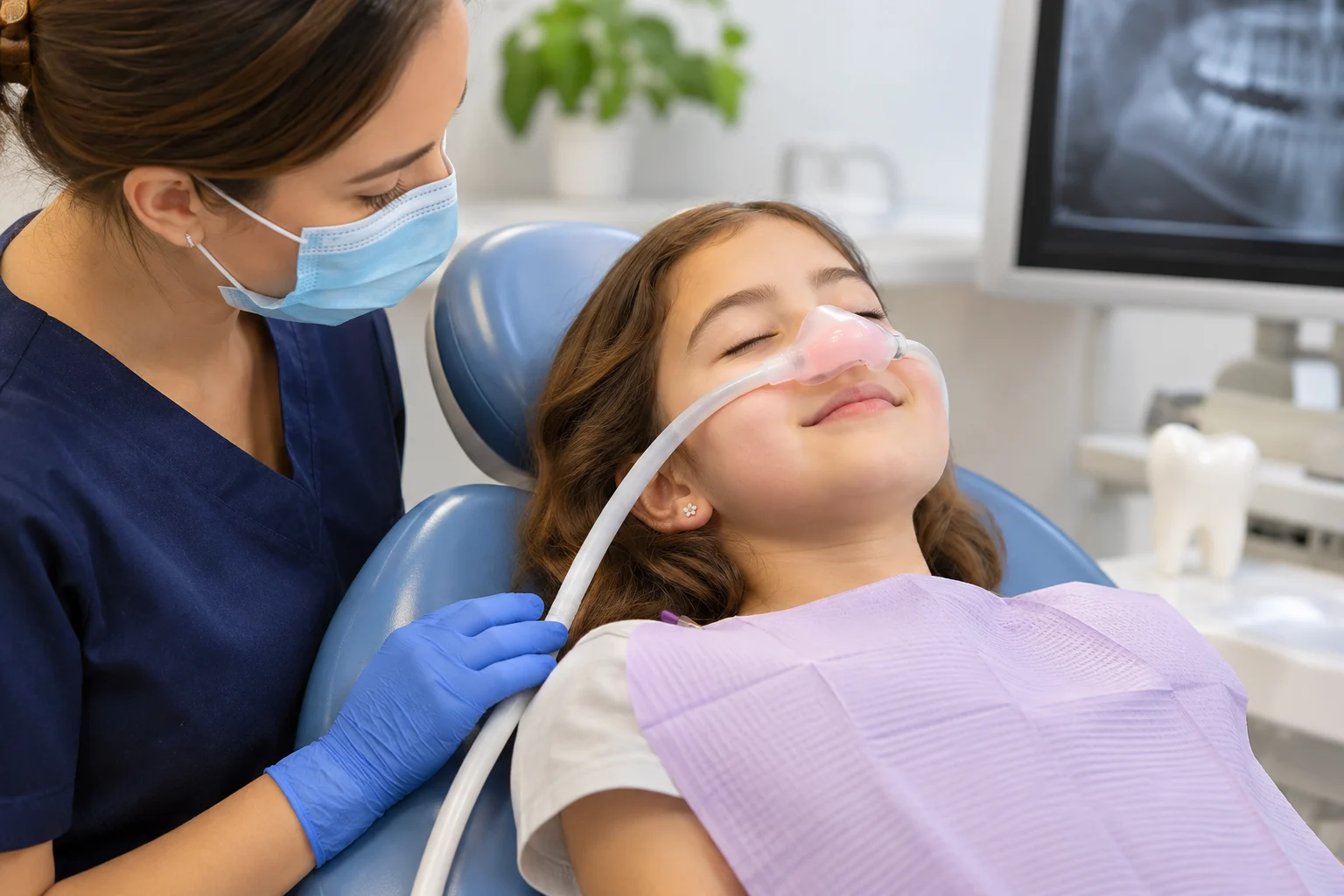
When a dentist mentions sedation for your child, a lot of thoughts arrive at once. Is it truly necessary? How does it work? And, if we are being honest, what will it cost? That last question is completely reasonable, and it is one of the most common ones families ask.
So, does dental insurance cover sedation for kids? Sometimes, partly, or not at all, depending on your plan. Many dental plans treat nitrous oxide and lighter sedation as optional comfort services, while deeper sedation or general anesthesia may be considered when it is medically necessary. The answer depends on your specific plan, the type of sedation, and the reason it is being recommended. What follows is a calm, general look at how coverage tends to work, along with practical ways to plan ahead. It is general information and not a promise of coverage, and your own plan documents always have the final word.
Why Might a Child Need Sedation for Dental Care?
Sedation dentistry is not used for every child, and many children do very well with simple, gentle approaches. Dentists may bring it up in a few situations.
- Dental anxiety: Some children feel very worried or overwhelmed by dental visits, even with a patient, friendly team. Our tips for helping kids with dental anxiety can make visits easier whether or not sedation is needed.
- Longer or more involved treatment: When several procedures are needed, sedation may help a child stay comfortable and still.
- Young age: Very young children may find it hard to cooperate for treatment, even when they are not afraid.
- Special health care needs or sensory sensitivities: Some children have difficulty tolerating dental care in the usual way, and special needs dental care can offer a gentler starting point.
- Strong gag reflex or difficulty staying still: These can make treatment hard to complete.
Your child's dentist can explain why sedation is being suggested and talk through alternatives, so you can decide what feels right for your family. If safety is on your mind, our post on whether sedation dentistry is safe for kids walks through the usual precautions.
What Types of Sedation Are Used in Pediatric Dentistry?
There are several levels, and each works a little differently. Not every office offers every level, so ask which options are available and which one fits your child. Here is a general overview.
- Nitrous oxide: Often called laughing gas, this is inhaled through a small mask and helps many children feel relaxed. It wears off quickly once the mask is removed. See how nitrous oxide works for kids.
- Oral sedation: A medication taken by mouth before the appointment to help a child feel calm and sleepy.
- IV sedation: Medication given through a vein, which allows a deeper level of sedation and adjustments during treatment.
- General anesthesia: A child is fully asleep during the procedure, with a specially trained anesthesia provider monitoring them.
The type recommended depends on your child's age, health, the length of treatment, and other factors. Each level has its own considerations, which is one reason insurers often treat them differently.
Does Dental Insurance Cover Sedation for Kids?
Dental plans vary widely, and sedation is one area where the rules can be especially specific. A few patterns families run into include the following.
- Nitrous oxide: Some plans cover it, some cover it only in certain situations, and some do not cover it at all.
- Oral sedation: Coverage varies. Some plans exclude it or treat it as an optional comfort service.
- IV sedation and general anesthesia: Plans may require documented medical necessity, and coverage may depend on the reason for treatment.
- Age or condition requirements: Some plans only consider sedation when a child is below a certain age or has a documented condition that makes standard treatment difficult.
Because of all this, two families with different plans can hear very different answers about the same type of sedation. Reading your benefits summary, or calling the insurer to ask directly, is the most reliable way to find out what applies to you.
Does Medical Insurance Ever Cover Pediatric Sedation Dentistry?
Sometimes the answer lies outside of a dental plan. When general anesthesia is needed, parts of the cost may be handled under medical insurance instead of dental insurance. This can depend on your child's health, the reason for the procedure, and the plan's rules.
It is not unusual for costs to be split several ways. The dental treatment itself, the anesthesia provider, and any facility fees may each be billed separately and processed through different benefits. Asking how each piece is billed, and which plan may apply, helps you avoid confusion later.
What Plan Terms Affect Sedation Coverage?
Even when sedation is covered, certain terms shape what a family actually pays. These are the ones to watch for.
- Medical necessity: Some plans require documentation showing why sedation is needed.
- Prior authorization or predetermination: Many plans let the office submit a request in advance, so you can see an estimate of what may be covered before treatment.
- Deductible: An amount you may need to pay before the plan begins sharing costs.
- Coinsurance or copay: Your share of the cost after the deductible.
- Annual maximum: The most the plan will pay in a given year, which matters if other treatment is needed too.
- Waiting period: A set time after enrollment before certain services become eligible.
- In network and out of network providers: This can affect both the dentist and any anesthesia provider.
If you only remember one thing, let it be this: ask for an estimate in writing before treatment whenever possible.
How Can You Plan for Pediatric Sedation Dentistry Costs?
Planning ahead takes much of the stress out of the process. Here are some practical ideas.
- Ask for a written treatment plan: It should list the recommended procedures and the type of sedation.
- Request a cost estimate: Ask what is included, such as the sedation itself, monitoring, and any separate provider fees.
- Check your benefits in advance: Call your insurer with the procedure codes the office provides and ask how sedation is handled. At Polished Pediatric Dentistry we are in network with a wide variety of PPO plans, and we are happy to submit claims on your behalf even when we are not in network with yours. Our insurance information page has the details, and since being listed does not guarantee coverage for a specific service, it is worth confirming with your insurer.
- Ask about prior authorization: If your plan offers it, it can clarify coverage before treatment.
- Look into HSA or FSA funds: If you have a health savings account or flexible spending account, ask your plan administrator whether sedation costs may qualify.
- Consider a membership option: The Polished Savings Plan is our alternative to traditional dental insurance. Ask our team how it may apply to the care your child needs.
- Explore public coverage: Depending on your household circumstances, your child may qualify for a public program such as NJ FamilyCare. Eligibility rules change, so confirm current details with the state or an enrollment specialist, and check which offices participate.
Keep copies of estimates, authorizations, and receipts. They are very helpful if you need to follow up with your insurer later.
What Questions Should You Ask the Dental Office and Your Insurer?
A short list of questions makes these conversations much easier.
- Why is sedation recommended, and are there alternatives?
- Which type of sedation is being suggested?
- Who will provide and monitor the sedation?
- What costs are involved, and are any billed separately?
- Does my plan cover this type of sedation, and are there requirements?
- Can the office submit a predetermination or prior authorization?
- Will any portion fall under medical insurance?
- What should my child do before the appointment, such as fasting? Our guide to eating before dental sedation covers the basics, and your dentist will give instructions specific to your child.
Take notes, ask for details in writing, and take a day to think things over if you need to. Clear information leads to better decisions.
Questions About Pediatric Sedation Dentistry Costs? Contact Polished Pediatric Dentistry
Sorting out insurance and costs should not add to the stress of preparing your child for dental care. If you have questions about dental insurance for kids' sedation, planning for the cost, or what to expect at a visit, contact Polished Pediatric Dentistry. Dr. Dinah Jammal and our team are glad to talk through your questions in a friendly, no pressure way. We welcome families from Marlboro, Manalapan, Colts Neck, Matawan, Holmdel, Old Bridge, East Brunswick, Howell, Morganville, and throughout Monmouth County, NJ. Reach out or call (732) 226-1995 to ask about scheduling and next steps.
Dental Insurance and Kids Sedation FAQs
Does dental insurance usually cover sedation for children?
It varies a lot. Some plans cover certain types of sedation in specific situations, while others do not cover it at all. Your plan documents or insurer can explain what applies to you.
Is nitrous oxide covered by insurance?
Some plans include it, some limit it, and some exclude it. Ask your insurer how your plan treats nitrous oxide for children.
Can medical insurance pay for general anesthesia for dental work?
In some situations, yes, particularly when the circumstances meet the plan's criteria. Coverage depends on your child's health, the reason for the procedure, and the plan's rules.
What is prior authorization, and should I ask for it?
It is a process where the plan reviews a proposed treatment before it happens. It can give you a clearer idea of what may be covered, so it is worth asking whether your plan offers it.
What if my plan does not cover sedation?
You may still have options, such as using HSA or FSA funds, asking about a membership plan, or discussing alternatives with your dentist. Understanding the full cost and your choices helps you plan.
Should I get an estimate before my child's sedation appointment?
Yes, whenever possible. A written estimate that lists the procedures, the type of sedation, and any separate provider fees helps you compare it against your benefits before treatment.
Does Dental Insurance Cover Sedation for Kids?
Does dental insurance cover sedation for kids? See how coverage usually works, what to ask your insurer, and ways to plan for the cost.

White Spots on Children's Teeth: Causes and Next Steps
Noticing white spots on your child's teeth? Learn the common causes, from early enamel changes to fluorosis, and when to see a pediatric dentist.
My Child Knocked Out a Tooth: Emergency Steps for Parents
Learn what to do if your child knocked out a tooth. Follow essential first-aid steps for baby teeth and permanent teeth to protect your child's smile.