
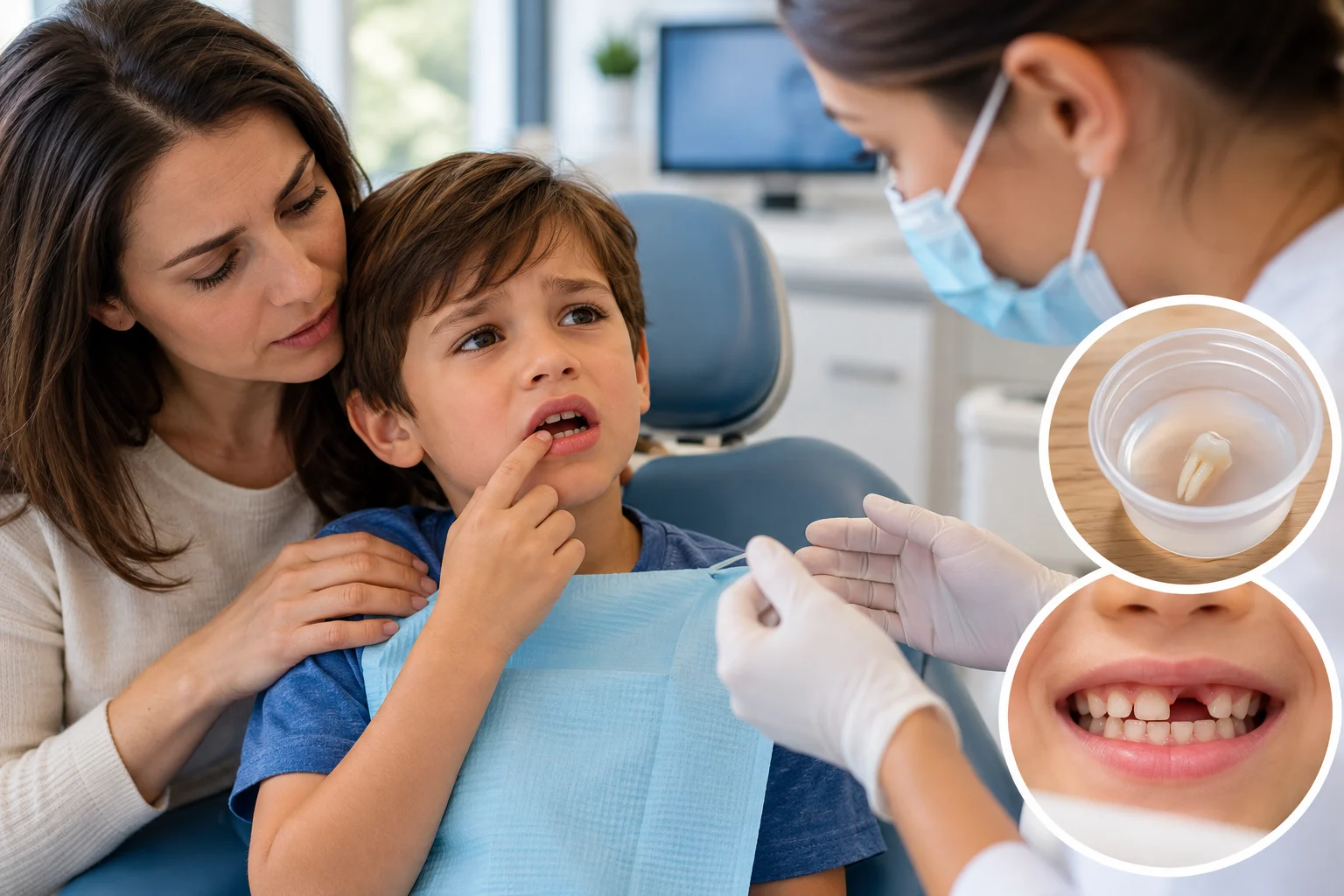
Accidents happen in a blink. A tumble off a bike, a collision on the soccer field or a trip over a toy can all lead to a dental injury, and seeing blood and a missing tooth is frightening for any parent. Knowing what to do when your child knocks out a tooth can make a real difference, both for comforting your child and for protecting their long-term oral health.
What you do first depends on whether the tooth is a baby tooth or a permanent tooth. A calm, step-by-step approach helps your child feel safe and protects the gums and bone while they heal.
Below, we cover immediate first aid, how to tell baby and permanent teeth apart, and when to get emergency pediatric dental care.
What to Do First When Your Child Knocks Out a Tooth
Right after a fall or impact, your calm is your best tool. Your child will look to you for reassurance, so take a breath and work through these steps:
- Check for head or serious injury: Before looking at the mouth, check whether your child lost consciousness, feels dizzy or has heavy facial bleeding. If you suspect a concussion or a broken jaw, go to the emergency room right away.
- Find the tooth and handle it by the crown: Pick it up by the chewing surface, never the root, so the delicate cells on the root stay intact.
- Control the bleeding: Mouth injuries often bleed heavily. Have your child bite gently on clean, damp gauze or a washcloth for 10 to 15 minutes.
- Apply a cold compress: Hold an ice pack wrapped in a soft towel against the cheek or lip to ease swelling and discomfort.
- Call your pediatric dentist: Phone the office as soon as you can to describe the injury and get guidance on next steps. Our guide to pediatric dental emergencies explains when to call us and when to go to the ER.
Acting quickly means the socket can be checked and protected from complications. A calm voice helps too, and our tips on helping kids with dental anxiety are useful for the visit that follows.
Is It a Baby Tooth or a Permanent Tooth? Why It Matters
The treatment for a knocked-out baby tooth is very different from the treatment for a permanent tooth, so it is worth working out which one you are dealing with.
If It Is a Baby Tooth
Do not try to put a baby tooth back in the socket. Pushing it in can damage the permanent tooth developing underneath. Stop the bleeding, comfort your child and have your pediatric dentist take a quick look to make sure no tooth fragments are left behind.
If It Is a Permanent Tooth
When a permanent tooth is knocked out, time matters. The best chance of saving it comes from getting it back in place or into care as quickly as possible, ideally within 30 to 60 minutes.
- Rinse gently if it is dirty: Briefly rinse the tooth with milk, saline or cool water. Do not scrub it, brush it or use soap.
- Try to put it back: If your child is old enough and can hold it without swallowing it, gently slide the tooth back into the socket and have them bite on clean gauze.
- Store it in milk if you cannot reinsert it: Place the tooth in a small container of cold milk, saline or a tooth preservation kit. Do not store it dry or in a napkin, and avoid leaving it in plain water.
Then call us right away. We offer same-day emergency visits so children can be seen quickly, and the sooner we can treat the tooth, the better its chances.
Signs to Watch for After a Dental Injury
Even if no tooth came out, a hard blow to the mouth can cause hidden damage to nearby teeth, nerves and bone. In the days and weeks afterward, watch for:
- Tooth discoloration: A tooth that slowly turns dark pink, gray or brown may have nerve damage or bleeding inside.
- Sensitivity or pain: Sharp pain when eating, drinking something cold or chewing can mean a cracked or inflamed nerve.
- Gum swelling or pimple-like bumps: A small bump on the gum near the injury can signal an infection.
- Loose or shifted teeth: A tooth that feels loose or sits out of line with the bite should be checked.
Catching these signs early helps prevent problems for the surrounding teeth. If a tooth is damaged, we can talk through restorative dentistry options that fit your child's age and the type of injury.
Long-Term Recovery and Protecting Your Child's Smile
Once the emergency has passed, a few simple steps support healing:
- Stick to soft foods for a few days: Yogurt, applesauce, scrambled eggs and warm soups are easy on tender gums.
- Keep up gentle hygiene: Keep brushing the other teeth twice a day with a soft toothbrush. Avoid scrubbing the healing area for the first few days and rinse gently with lukewarm salt water.
- Use a custom sports mouthguard: If your child plays sports or does gymnastics, a custom-fitted mouthguard greatly lowers the risk of another injury.
- Go to follow-up visits: Follow-up appointments let us monitor healing and the health of the surrounding teeth. Regular preventive dentistry visits keep an eye on the whole mouth too.
Schedule an Evaluation at Polished Pediatric Dentistry
A dental injury is stressful, but having a trusted team on your side helps keep your child calm and comfortable. If your child knocked out a tooth or took a hard bump to the mouth, Dr. Dinah Jammal and our team will give them a thorough, gentle evaluation in a reassuring, child-friendly setting. We care for families in Marlboro and nearby towns, including Holmdel, Old Bridge and Manalapan. Contact Polished Pediatric Dentistry today if your child knocked out a tooth or needs guidance after a dental injury.
Frequently Asked Questions About Knocked-Out Teeth in Children
What should I do right away if my child knocks out a tooth at school or sports practice?
Ask the teacher or coach to find the tooth, handle it only by the crown, keep it in cold milk and call you right away so you can get emergency pediatric dental care.
Will losing a baby tooth early affect my child's permanent teeth?
It can. When a baby tooth is lost early, neighboring teeth may drift into the gap. Your dentist can tell you whether a space maintainer would help keep room for the adult tooth.
Can a dentist put a knocked-out baby tooth back in?
No. Baby teeth are not reimplanted because doing so risks injuring the developing permanent tooth under the gum.
How long can a permanent tooth stay out of the mouth before it is reimplanted?
The best chance of success comes when the tooth is back in its socket or stored in milk and seen by a dentist within 30 to 60 minutes of the injury.
What can I give my child for pain after a tooth injury?
An age-appropriate over-the-counter pain reliever such as acetaminophen or ibuprofen can help. Follow the dosing directions carefully and check with your child's doctor or dentist if you have any questions.
My Child Knocked Out a Tooth: Emergency Steps for Parents
Learn what to do if your child knocked out a tooth. Follow essential first-aid steps for baby teeth and permanent teeth to protect your child's smile.
Early Signs of Tooth Decay in Children Parents Shouldn't Ignore
Learn how to spot early signs of tooth decay in children. Protect your child's smile with helpful tips on chalky spots, sensitivity, and preventative habits.
Desensitization Visits for Kids - Comfort Before Dental Care
Learn how dental desensitization visits help anxious kids and neurodivergent children get comfortable with pediatric dental care through gentle exposure.