
If your child gets nervous before a dental appointment, you are far from alone. Dental anxiety in children is one of the most common concerns parents bring up, and it is also one of the easiest to manage with the right tools. One tool that comes up often is nitrous oxide, sometimes called laughing gas. But what is nitrous oxide exactly, and how does it work for kids who are squirming in the chair or gripping the armrest a little too tight?
At Polished Pediatric Dentistry, this question gets asked almost every week. Parents want to understand what their child is breathing in, whether it is appropriate for a young patient, and what the actual experience looks like from start to finish. This guide walks through all of it in plain language, without the jargon.
What Is Nitrous Oxide and Why Is It Used in Pediatric Dentistry
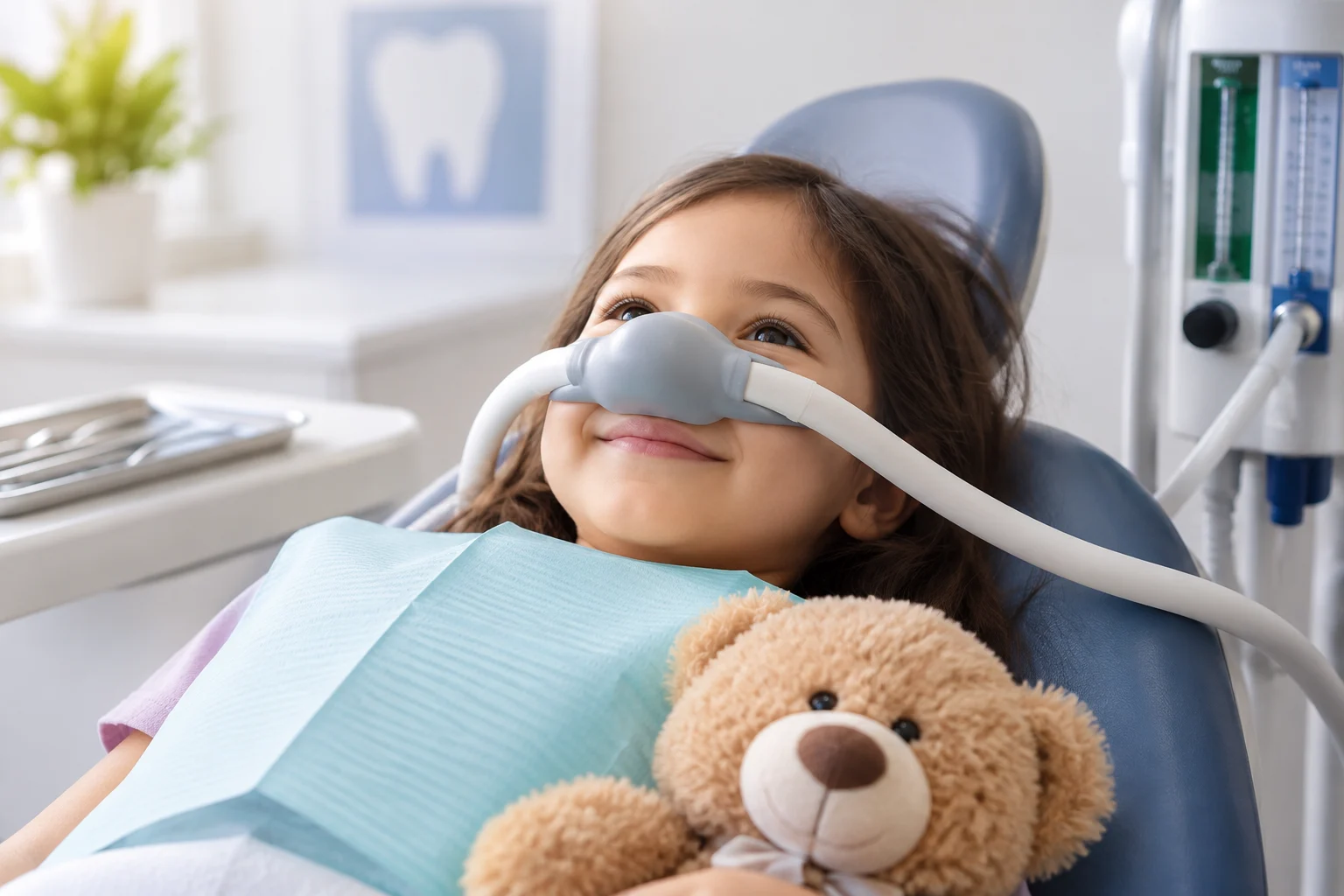
So, what is nitrous oxide? It is a colorless, mildly sweet-smelling gas that has been used in dentistry for well over a century. It is mixed with oxygen and delivered through a small nosepiece, sometimes called a nasal hood, that fits comfortably over a child's nose. As the child breathes normally, the gas helps them feel more relaxed, a little lighter, and less focused on any sounds or sensations in the room.
Unlike sedation that puts a child to sleep, nitrous oxide keeps a child fully awake and able to respond to the dentist. Many kids describe the feeling as floaty, giggly, or calm, which is part of why it earned the nickname laughing gas. For a child who tenses up at the sight of a dental tool or who has had a rough experience in the past, this shift in mindset can make a real difference in how the visit goes.
Dentists who specialize in treating children often lean on nitrous oxide because it works quickly, wears off quickly, and gives the dental team a gentle way to help a child sit still and stay comfortable through a cleaning, a filling, or another routine procedure.
How Does Nitrous Oxide Work for Kids During Treatment
Once the question of what nitrous oxide is is out of the way, the next thing parents usually ask is how it actually works once their child is in the chair. The process is fairly simple. A small, scented nosepiece is placed over the child's nose, and the child is asked to breathe normally through it. Within a couple of minutes, most kids start to feel more settled.
The dental team adjusts the mixture of nitrous oxide and oxygen throughout the appointment based on how the child is responding. Because the gas takes effect fast and clears out of the system almost as quickly once the mask comes off, there is no lingering grogginess for most children. Many are back to their normal selves within minutes of the nose piece being removed, often breathing in a bit of plain oxygen at the end to help the gas clear out fully.
This is one of the reasons nitrous oxide for kids at dentist offices has remained such a widely used option. It does not require needles, it does not put a child into a deep sleep, and it allows the dentist to communicate with the child throughout the visit, checking in and making adjustments as needed. For children who become especially uneasy about dental appointments, parents may also find it helpful to learn more about dental anxiety in children and ways to make visits feel more manageable.
Is Nitrous Oxide Safe for Kids? What the Research and Experience Show
This is usually the biggest question on a parent's mind, and it deserves a straightforward answer. Is nitrous oxide safe for kids? Based on decades of clinical use, nitrous oxide is generally considered a safe option for children when it is administered by a trained dental professional who follows appropriate dosing and monitoring guidelines. It has a long track record in pediatric dentistry precisely because it is mild, well tolerated, and easy to adjust or stop at any point during treatment.
That said, safety always depends on the individual child. A dentist will typically review a child's medical history, including any respiratory conditions, before recommending nitrous oxide. Children with certain breathing issues, cold or congestion symptoms on the day of the visit, or specific medical conditions may need an alternative approach. This is why the question of whether nitrous oxide is safe for kids is best answered on a case-by-case basis rather than with a blanket yes or no.
Parents can also expect the dental team to monitor their child closely throughout the appointment, watching how they respond and adjusting the gas levels as needed. If a child seems uncomfortable at any point, the flow can be reduced or stopped right away. This level of control is part of what makes nitrous oxide such a commonly recommended option for anxious young patients.
What to Expect With Nitrous Oxide for Kids at Dentist Visits
Walking a child through what to expect ahead of time can make the whole experience smoother. Here is a general idea of how nitrous oxide for kids at dentist appointments typically unfolds:
- The dentist or hygienist explains the nose piece to the child, sometimes calling it a special smelling mask, and lets the child see and touch it first.
- The child sits back in the chair, and the nosepiece is placed gently over their nose.
- The child breathes normally while the dental team starts with a low level of gas and adjusts gradually.
- Once the child feels relaxed, the dentist begins the planned treatment, checking in periodically.
- Near the end of the appointment, the child breathes plain oxygen for a few minutes to help clear the nitrous oxide from their system.
- The child sits up, and most are ready to head home shortly after, though a light snack or quiet activity afterward is a nice way to ease back into the day.
Every child responds a little differently, and the dental team will pace things based on comfort level rather than rushing through a fixed script. Regular pediatric dental cleanings can also help children become familiar with the dental setting and build positive experiences over time.
Schedule a Comfortable Visit at Polished Pediatric Dentistry
If your child gets nervous about dental appointments, you do not have to figure it out alone. The team at Polished Pediatric Dentistry takes the time to explain every step, answer questions about what nitrous oxide is, and help you decide whether it is the right fit for your child's next visit. From routine cleanings to more involved treatment, Polished Pediatric Dentistry focuses on keeping kids relaxed, informed, and at ease in the chair.
Polished Pediatric Dentistry proudly welcomes families from Marlboro, Manalapan, Colts Neck, Matawan, Holmdel, Old Bridge, East Brunswick, Howell, Morganville, and throughout Monmouth County, New Jersey. Reach out today to schedule an appointment and talk through options like nitrous oxide with a team that understands what young patients need to feel comfortable.
For parents preparing their child for an upcoming appointment, reviewing what to expect during a first dental visit can also make the experience feel more familiar. If your child ever experiences an urgent dental problem, information about children's dental emergencies can help you know when prompt care may be needed.
Frequently Asked Questions About Nitrous Oxide for Kids
Q: What is nitrous oxide used for in children's dentistry?
A: It is used to help children feel calmer and more comfortable during dental treatment, particularly for kids who feel anxious, have sensory sensitivities, or need a slightly longer procedure.
Q: Is nitrous oxide safe for kids with allergies or asthma?
A: In many cases, yes, but it depends on the specific condition and how well controlled it is. A dentist will review your child's health history and may recommend an alternative if there is a respiratory concern.
Q: How long does nitrous oxide take to wear off?
A: Most children feel back to normal within a few minutes after breathing plain oxygen at the end of the appointment, since nitrous oxide clears from the body quickly.
Q: Will my child feel drowsy or unaware during nitrous oxide for kids at dentist visits?
A: No. Children stay awake and can still respond to questions or instructions. The goal is relaxation, not sleep.
Q: Can my child eat before receiving nitrous oxide?
A: Unlike some deeper sedation methods, nitrous oxide does not usually require fasting, though a dentist may give specific guidance based on your child's treatment plan.
Q: Does nitrous oxide have side effects?
A: Some children may experience mild nausea or a brief headache, though this is uncommon and typically resolves quickly once the gas is stopped and oxygen is given.
What Is a Sensory Friendly Dental Visit? A Guide for Parents
Curious what a sensory friendly dental visit involves? Learn how a sensory friendly pediatric dentist adjusts sound, light and pacing for a calmer checkup.
Dental Care Tips for Children With ADHD: A Parent Guide
Looking for dental care tips for children with ADHD? Discover practical strategies for brushing, dentist visits, and building calmer oral care routines.

Pacifiers vs Thumb Sucking: When to Stop for Healthy Teeth
Learn when to stop pacifiers vs thumb sucking, how these habits affect teeth and jaw development, and gentle ways to help your child break the habit.