
Taking a child on the autism spectrum to the dentist can feel like a lot to plan for. Sensory sensitivities. Communication differences. Unfamiliar environments. Any one of these can turn a routine cleaning into something overwhelming for both you and your child. Here's the thing, though: with the right prep and a dental team that actually gets it, visits can become predictable. Manageable. Something your child grows comfortable with over time.
This walkthrough breaks down what actually happens before, during, and after a visit to a pediatric dentist for kids with autism. That way you know what to expect at every stage, and you can prepare your child accordingly.
Step 1: Choosing a Practice That Understands Sensory Needs
Before the first appointment even happens, the practice you choose matters. A lot. A pediatric dentist experienced in caring for children with autism will often begin by learning about your child's unique needs, including sensory preferences, communication style, and previous dental experiences. Understanding what has worked well in the past, as well as what situations may have been challenging, helps create a more comfortable and personalized dental visit.
At Polished Pediatric Dentistry, this often starts with a phone call or intake form. Parents share the specifics: Does your child prefer dim lighting? Are certain sounds distressing? Does your child respond better to visual instructions than verbal ones? This information shapes how the entire visit is structured, from the waiting room to the treatment chair.
What to Ask When Researching a Dentist for Autistic Kids
Looking into dental care for autistic children? Ask the practice directly:
- Can we schedule a shorter "meet and greet" visit before actual treatment begins?
- Is there flexibility with appointment timing, like early morning slots when the office is quieter?
- Are noise-reducing headphones or weighted blankets available during exams?
- Can the same dental team see my child at each visit for consistency?
These questions give you a clear sense of whether the practice's approach actually lines up with what your child needs.
Step 2: Preparing Your Child Before the Visit
Preparation at home makes a real difference. Many parents find it helps to introduce the idea of the dentist gradually, days or even weeks in advance, rather than dropping it on your child the morning of the appointment.
For additional guidance, parents can also review these tips for preparing a special needs child for the dentist before the appointment.
Using Visual Schedules and Social Stories
A lot of practices that focus on dental care for autistic children provide or recommend visual schedules, picture books, or short videos showing what a visit looks like, step by step. Walking through these at home lets your child see the waiting room, the chair, the tools, and the staff before ever setting foot in the office. Familiarity reduces uncertainty. And uncertainty is usually what triggers the anxiety in the first place.
Practicing at Home
Simple practice runs help too. Let your child sit in a chair and tilt their head back. Count teeth with a soft toothbrush. Use a mirror to look inside their own mouth. Small stuff like this builds comfort with the physical sensations of a real exam, long before the real exam happens.
Step 3: Arriving at the Office
When you arrive, a dentist for kids with autism will typically have already adjusted the environment based on what you shared during intake. That might mean a quieter waiting area, dimmer lighting, or the option to wait in the car until the exam room is ready, so your child skips the crowded lobby altogether.
Staff at Polished Pediatric Dentistry are trained to greet children calmly, using simple, direct language. They give your child a moment to get used to the space instead of rushing straight into the exam.
The Warm-Up Period
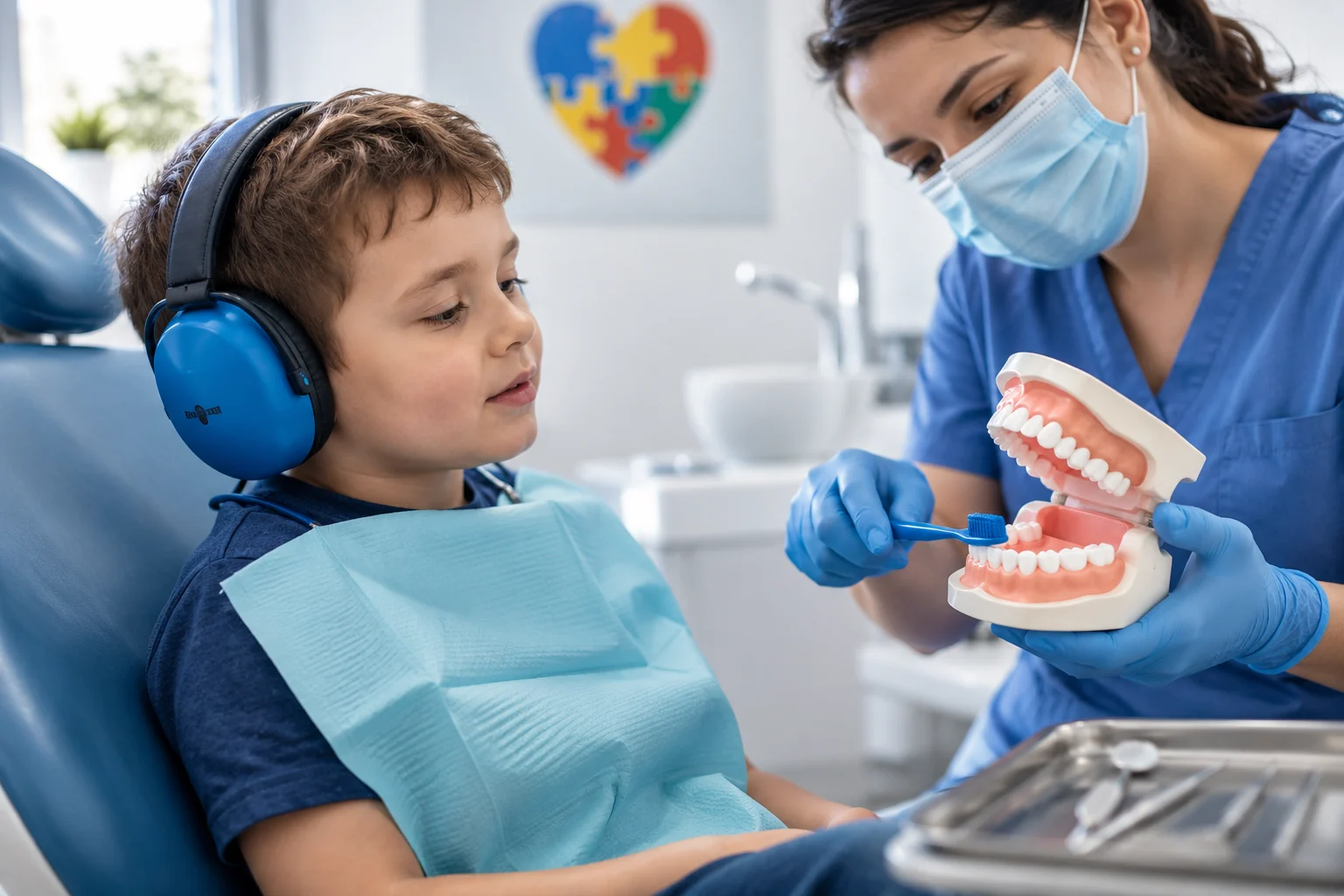
Rather than jumping right into treatment, the dental team often spends the first few minutes letting your child explore the room a bit. They might show your child the tools, let them touch a mirror or a soft brush, and explain each step in clear, concrete words. This "tell-show-do" method is common in dental care for autistic children because it takes the surprise out of the equation. No surprises, no drama.
Step 4: During the Exam
Once your child seems settled, the actual exam begins. But it's paced according to your child's tolerance, not some fixed timeline the office has to hit.
Breaking the Visit Into Small Steps
Instead of treating the exam as one long process, the dentist typically breaks it into small, manageable pieces: counting teeth, checking for any concerns, and using a small mirror. Breaks are built in as needed. If your child needs a pause to regroup, the team lets that happen rather than pushing forward anyway.
Sensory Tools and Comfort Options
Many offices offer sensory-friendly tools such as weighted lap pads, sunglasses to dim the overhead lights, or noise-canceling headphones to soften the sound of equipment. Some kids do better holding a favorite object from home. And parents are usually welcome to stay close by, holding their child's hand through the whole thing.
Communication Style Matters
A pediatric dentist for special needs, working with autistic patients will often use short, literal phrases like "open wide" or "count to ten" instead of anything abstract. Repetition and consistency in the wording, visit after visit, help build a sense of routine your child can actually rely on.
Step 5: After the Appointment
Once the exam or treatment wraps up, the visit doesn't just end abruptly. Many practices build in a short "cool-down" period, letting your child transition out of the chair at their own pace. Positive reinforcement (a small reward, a sticker, whatever works) is common. It signals that the visit is done and that it went well.
Talking About the Visit Afterward
At home, it helps to talk through the visit in simple terms. Praise the specific things your child did well, like sitting in the chair or letting the dentist count their teeth. This reinforces the experience in a positive light and sets up the next appointment to go even smoother.
If anxiety remains a concern, parents may also find it helpful to explore these strategies for helping kids with dental anxiety, particularly when preparing for future visits.
Step 6: Building Long-Term Comfort Over Multiple Visits
Dental care for autistic children isn't a one-visit fix. Comfort builds gradually, over several appointments, as your child gets to know the environment, the staff, and the routine. Many practices recommend more frequent, shorter visits at first rather than spacing them out, since consistency is what reinforces familiarity.
Over time, families often notice that visits that once took serious preparation become routine. Almost easy. Kids start developing their own coping strategies, with a consistent dental team backing them up the whole way.
Ready to Get Started?
Looking for a dentist for autistic kids near Marlboro, NJ? Polished Pediatric Dentistry welcomes families looking for a calm, structured, understanding approach to dental care. Every child's sensory needs and comfort levels are different, and our team takes the time to learn what actually works for yours. Reach out to schedule a visit or an introductory meet-and-greet. Let's make dental care a positive part of your child's routine, together.
FAQs on Dental Care Tips for Children
Q: How do I know if a practice has experience with dental care for autistic children?
A: Ask directly about their approach. Do they offer sensory accommodations? Flexible scheduling? Shorter introductory visits? A practice with real experience will have clear answers and specific examples of how they adjust care for individual needs, not vague reassurances.
Q: What if my child cannot sit still for a full cleaning?
A: Many pediatric dental teams break appointments into smaller steps across multiple visits instead of expecting one long session to work. This gradual approach is common, and it typically leads to steadier progress over time.
Q: Can I stay in the room during my child's appointment?
A: Yes. Most practices, including Polished Pediatric Dentistry, encourage parents to stay close by, especially during early visits. A familiar face nearby can make all the difference in how secure your child feels.
Q: Are sedation options available for children who struggle with dental visits?
A: Some practices offer options like mild sedation for kids who need extra support during treatment. This is typically discussed case by case, depending on your child's needs and medical history.
Q: How often should a child on the autism spectrum visit the dentist?
A: Routine visits every six months are generally recommended. That said, some children do better with more frequent, shorter visits at first, just to build comfort and familiarity with the office before settling into a normal schedule.

What Is a Sensory Friendly Dental Visit? A Guide for Parents
Curious what a sensory friendly dental visit involves? Learn how a sensory friendly pediatric dentist adjusts sound, light and pacing for a calmer checkup.

Dental Care Tips for Children With ADHD: A Parent Guide
Looking for dental care tips for children with ADHD? Discover practical strategies for brushing, dentist visits, and building calmer oral care routines.

Pacifiers vs Thumb Sucking: When to Stop for Healthy Teeth
Learn when to stop pacifiers vs thumb sucking, how these habits affect teeth and jaw development, and gentle ways to help your child break the habit.