

Choosing a dentist for your child is not the same as choosing one for yourself.
Kids need a different kind of care, and not every practice is actually built for that, even the ones with a colorful waiting room and a bowl of stickers at checkout. So how do you tell the difference between an office that looks kid-friendly and one that actually is?
Here is what genuinely matters when you are looking for a pediatric dental home in Marlboro, NJ, and a few questions worth asking before you book that first visit.
Quick Answer: What to Look For
- Board-certified pediatric training, not just a general dentist who is comfortable with kids
- A specific, practiced answer for handling scared or resistant children, not a vague "we're great with kids"
- A preventive-first approach that comes up at nearly every visit, not just when something is already wrong
- Clear communication in plain language, no jargon you have to look up in the parking lot
- Reviews that mention specifics, first visits, emergencies, wait times, not just a star rating
- A location and hours that actually work for your family, especially for emergencies
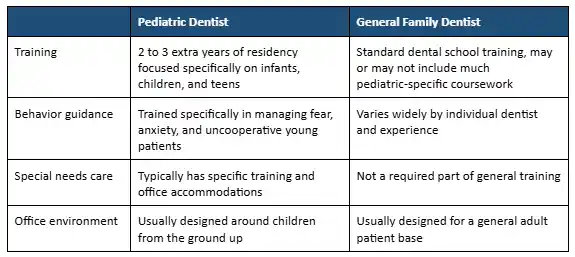
Pediatric Dentist vs. General Family Dentist
Both can legally treat children, but they are not the same training. Here is the real difference:
1. Ask How They Handle a Scared or Uncooperative Child
This is the single most important question on this list, and the one parents ask least often. Fear at the dentist is completely normal in young patients. What varies enormously is how a practice actually responds to it in the moment.
Listen for specifics: techniques like Tell-Show-Do (explaining an instrument, showing it, then using it), distraction tools, a willingness to pause and take a break mid-appointment. A vague "we're great with kids" is not an answer, ask for the actual approach. If your child already struggles with fear at appointments, these tips on helping kids with dental anxiety can also help you prepare before the visit.
2. Ask About Their First-Visit Philosophy
The American Academy of Pediatric Dentistry recommends a child's first visit by their first birthday, or within six months of the first tooth appearing. A lot of parents do not know this and wait until age three or four for a first visit.
A practice that handles very young children well will describe that first visit as low-pressure and exploratory, mostly about letting your child sit in the chair, meet the team, and associate the office with something other than discomfort. If a first visit sounds clinically intensive right out of the gate, that is worth noticing. If you're planning that appointment soon, here's what to expect during your child's first dental visit.
3. Ask How They Communicate With Parents
You want a practice that walks you through what happened and why at every visit, not one that hands your child back with a thumbs up and books the next appointment. A few things worth asking directly:
- Will you explain what you found at every visit, in plain language?
- How do you communicate if my child needs follow-up treatment?
- Is there a way to review notes or treatment history afterward?
4. Ask What Happens If Your Child Needs a Procedure They're Anxious About
A routine cleaning and a filling are very different experiences for an anxious child. Ask how the office prepares kids for the more involved appointments. Good answers usually include pre-visit tours, simple explanations sent home in advance, and sedation dentistry options like nitrous oxide for more involved work.
5. Ask About Their Preventive Care Philosophy
This one is less about catching a wrong answer and more about understanding how the practice actually thinks. Fluoride and sealants are both well-established preventive tools. A practice that pushes them on every single patient without any individual assessment, or one that never brings them up at all, is worth a second look. What you want to hear is a personalized recommendation based on your child's specific risk, diet, and habits. A strong focus on preventive dentistry helps reduce the risk of cavities before they become a problem.
6. Read Reviews Past the Star Rating
A high star rating tells you very little on its own. What matters more is what specific families say: how a first visit went, how an actual emergency was handled, whether the appointment ran anywhere close to on time.
7. Consider Location, Hours, and Emergency Availability
A great pediatric dentist across town is a lot less useful in an actual emergency. If you are in Marlboro, Old Bridge, Freehold, or Manalapan, it is worth confirming same-day emergency availability and hours that realistically fit around school and work before you need them. It is also helpful to know whether the practice provides dedicated emergency dentistry for children when unexpected dental injuries occur.
If Your Child Already Has Dental Anxiety
If you are searching for a new pediatric dentist because a previous experience went badly, you are not alone, and it is worth saying directly: this is fixable. Start with a low-stakes visit, a check-up rather than any treatment, and tell the office about your child's history beforehand so they can prepare and adjust their approach. A single bad appointment does not have to define the next ten years of your child's relationship with the dentist.
What This Looks Like at Polished Pediatric Dentistry
This checklist is not an abstract exercise. It is close to the standard Dr. Dinah Jammal built the Marlboro, NJ practice around: pediatric-specific training, a genuinely low-stress environment, a prevention-first approach, and straightforward communication with parents.
Whether or not Polished ends up being the right fit for your family, this is the list worth working through before committing to a dental home for your child.
Join the Polished Family Today!
Ready to experience the Polished difference? We're currently accepting new patients and can't wait to meet you! Give us a call at (732) 692-3930 or schedule your shine time to book your child's first visit. Let's start their journey to a lifetime of healthy, confident smiles together!
P.S. Follow us on Instagram @polishedpediatricdentistry for a behind-the-scenes look at our practice, helpful dental tips, and maybe even a Taylor Swift reference or two!
FAQs on Finding the Right Pediatric Dental Home
How do I know if my child needs a pediatric dentist instead of a family dentist?
If your child is anxious, has special needs, or you simply want a provider trained specifically in child behavior and development, a pediatric dentist is the better fit. Family dentists can treat children, but pediatric-specific training is not a requirement for them.
What age should my child start seeing a pediatric dentist?
No later than their first birthday, or within six months of their first tooth coming in, whichever comes first.
What if my child has never been comfortable at the dentist before?
Ask any practice you're considering how they specifically handle anxious or resistant kids. A vague answer is a sign to keep looking. Starting with a low-pressure check-up visit, rather than treatment, is usually the best reset.
Is a pediatric dentist more expensive than a general dentist?
Not typically. Routine visits are usually priced similarly, and many pediatric practices work with the same insurance plans as general dentists.
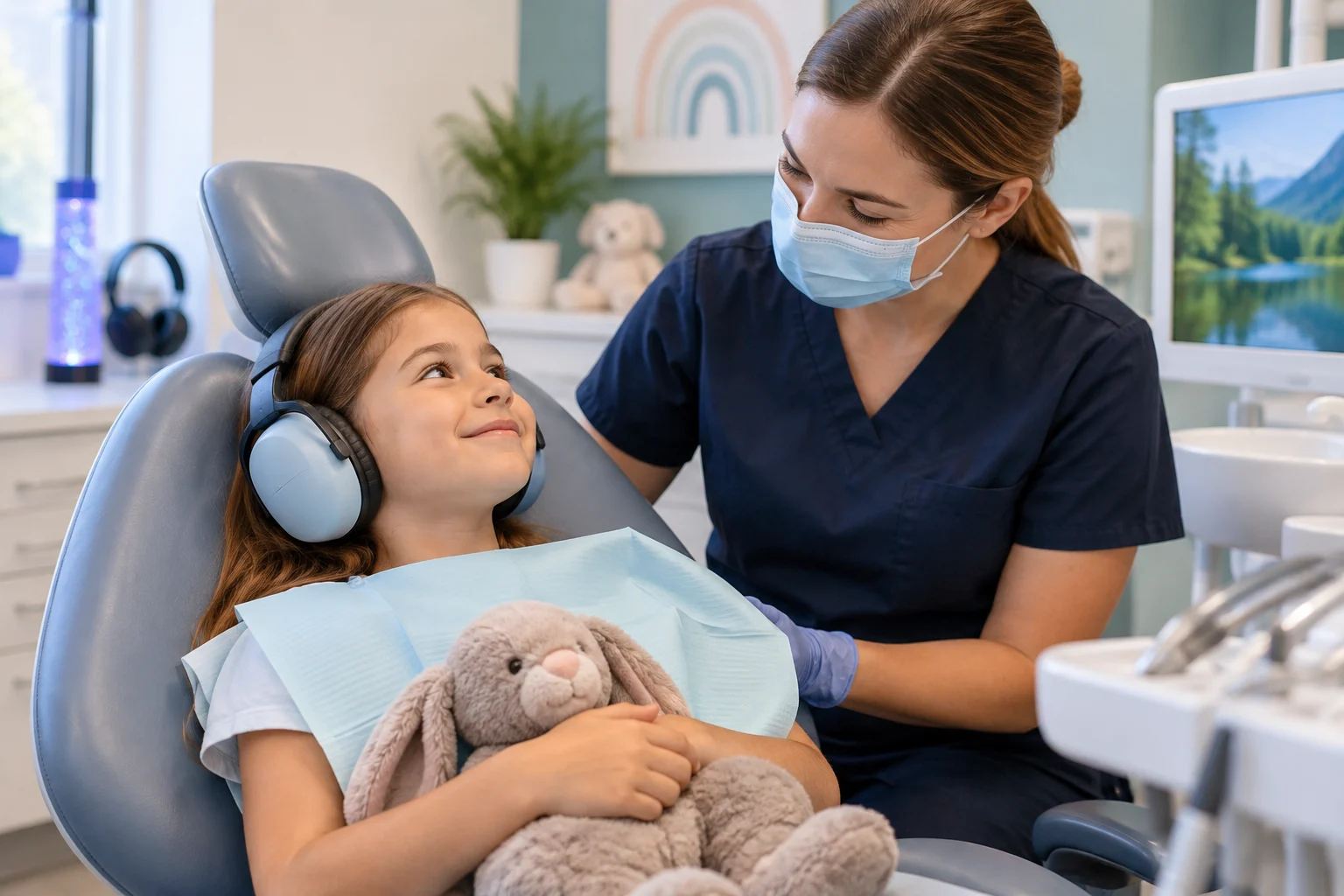
What Is a Sensory Friendly Dental Visit? A Guide for Parents
Curious what a sensory friendly dental visit involves? Learn how a sensory friendly pediatric dentist adjusts sound, light and pacing for a calmer checkup.
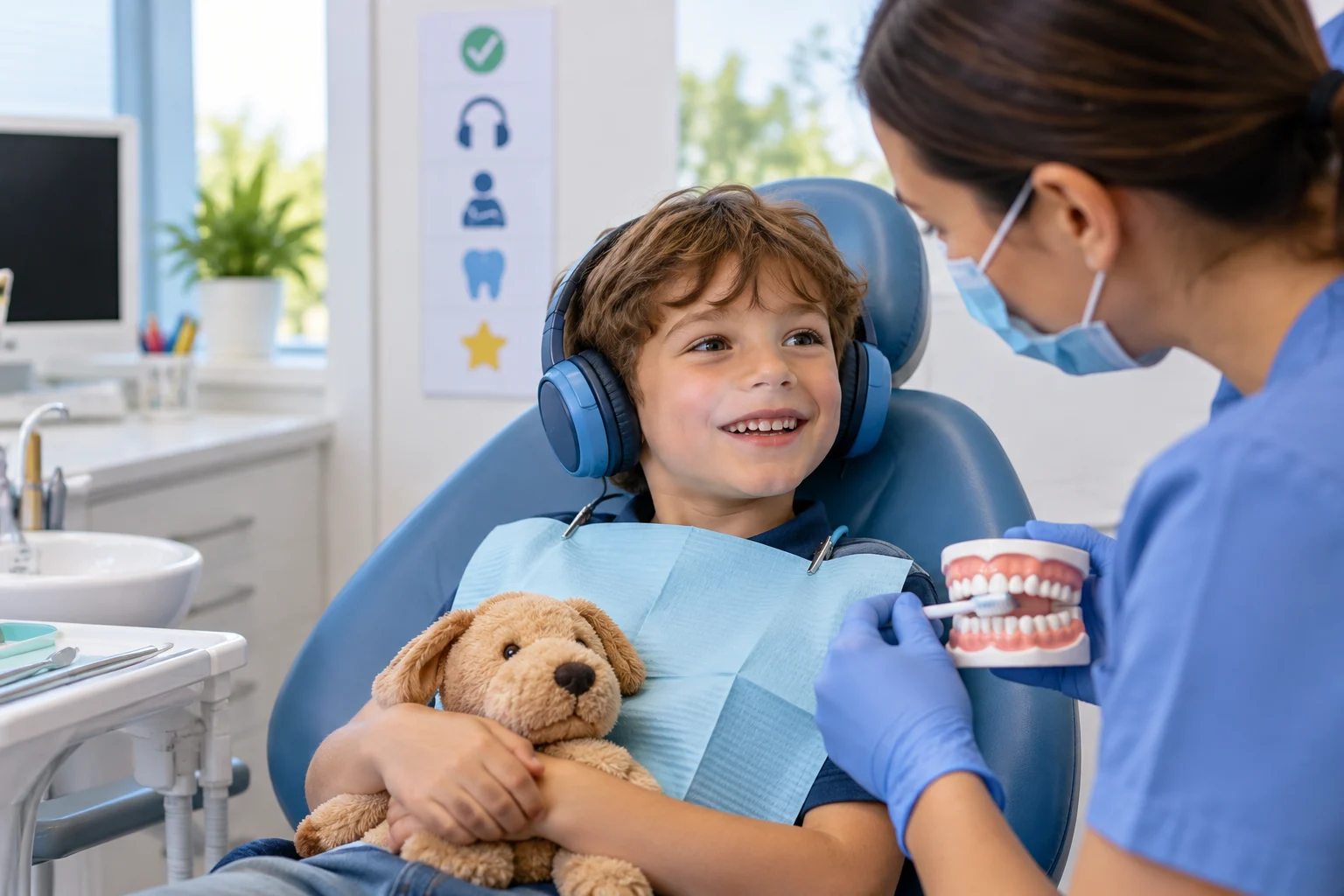
Dental Care Tips for Children With ADHD: A Parent Guide
Looking for dental care tips for children with ADHD? Discover practical strategies for brushing, dentist visits, and building calmer oral care routines.
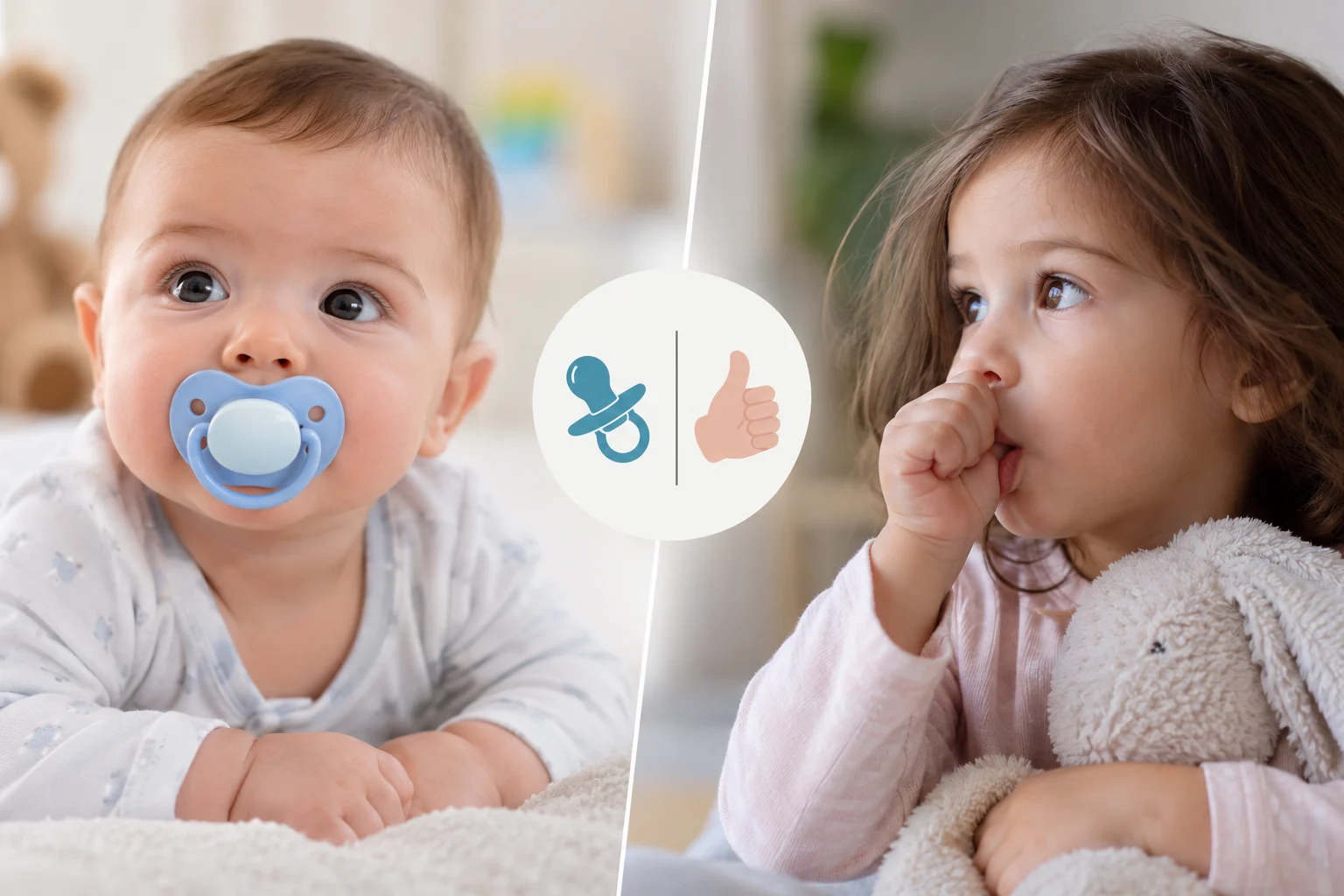
Pacifiers vs Thumb Sucking: When to Stop for Healthy Teeth
Learn when to stop pacifiers vs thumb sucking, how these habits affect teeth and jaw development, and gentle ways to help your child break the habit.