
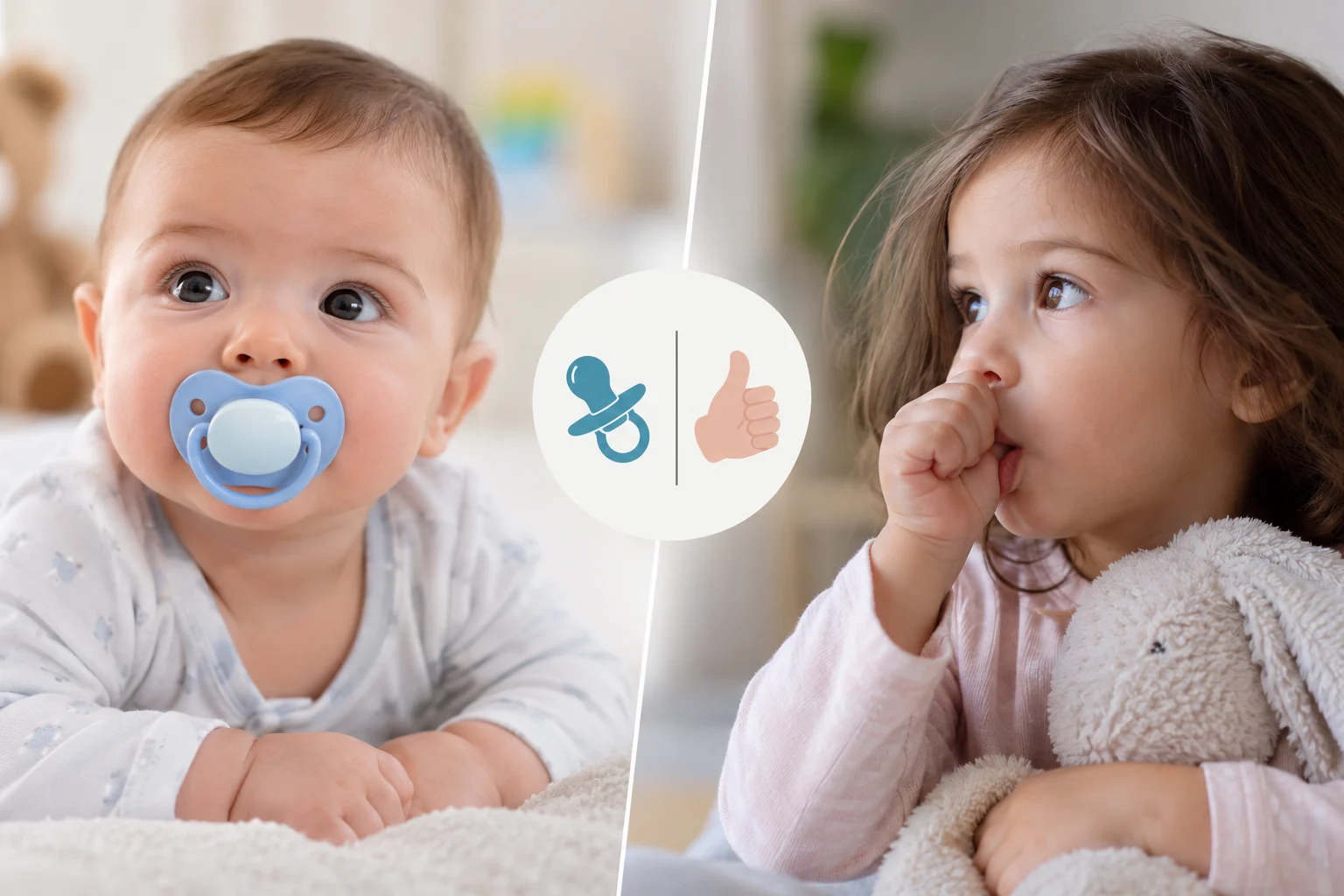
Almost every parent deals with this at some point. Your baby finds comfort in a pacifier or their own thumb, and for the first year or two, it barely crosses your mind as a dental issue. Then a well-meaning relative or a dentist mentions that the habit needs to end soon, and suddenly you are googling pacifiers vs thumb sucking at eleven at night trying to figure out if you are already behind schedule.
You are not behind schedule. Most children naturally lean on one of these habits, and both can be perfectly normal parts of early development. The real question parents want answered is not which one is worse, but when the habit crosses the line from harmless comfort into something that could affect how a child's teeth and jaw develop. At Polished Pediatric Dentistry, this comes up constantly, and the answer is more nuanced than a simple age cutoff.
Pacifiers vs Thumb Sucking: Which Habit Is Easier to Break
Both habits serve the same purpose for a young child. Sucking is a natural reflex that helps babies self-soothe, fall asleep, and feel secure. Pacifiers and thumbs both satisfy that reflex, but they are not identical when it comes to breaking the habit later on.
A pacifier is an object. It can be phased out gradually, hidden, left at home, or eventually thrown away in a small goodbye ritual that many toddlers respond well to. A thumb, on the other hand, is always available. There is no misplacing it, no forgetting it in the diaper bag, and no way to physically remove it from a child's reach. This is one of the main reasons dentists often find pacifier habits somewhat easier to manage and end compared to thumb sucking, which tends to be more deeply ingrained and harder to interrupt.
That said, neither habit is inherently a problem in the early years. The concern is really about duration and intensity, not which object a toddler prefers.
When to Stop Thumb Sucking and Pacifier Use for Dental Health
Most pediatric dentists agree that sucking habits are developmentally normal up to around age two or three. During this window, the mouth and jaw are still forming, and most children stop on their own or with gentle encouragement well before any lasting changes occur.
The concern grows once a child continues the habit past the eruption of their permanent front teeth, which typically begins around age six. Prolonged and aggressive sucking habits, especially ones that involve constant pressure against the roof of the mouth or the front teeth, can potentially contribute to issues like an open bite, a narrow palate, or teeth that shift out of alignment. This does not mean every child who sucks their thumb past toddlerhood will need orthodontic treatment, but it does mean the habit is worth monitoring more closely as your child approaches school age.
If your child is still relying heavily on a pacifier or thumb by age three or four, it is a reasonable time to start gently encouraging a change, without turning it into a source of shame or stress for your child. Regular infant dental care can also help parents understand whether their child's oral development is progressing as expected.
How Pacifier and Thumb Sucking Habits Affect Teeth and Jaw Development
Understanding why timing matters can make the transition feel less arbitrary. When a child sucks on a thumb or pacifier frequently and with real pressure, the constant force can gradually push the front teeth outward or pull them out of their natural position. It can also affect the shape of the roof of the mouth, sometimes leading to a narrower palate that may cause crowding later.
The intensity of the habit matters as much as the duration. A child who occasionally rests a pacifier in their mouth for comfort at bedtime is in a very different situation than a child who sucks aggressively throughout the day. Dentists look at both frequency and force when deciding how urgently a habit needs to be addressed.
The good news is that many changes caused by early sucking habits can improve on their own once the habit stops, particularly in younger children whose bones and teeth are still developing. The earlier a persistent habit is addressed, the more likely the mouth is to correct itself naturally over time. Parents can also learn more about when comprehensive preventive dentistry begins to understand how early dental care can support healthy oral development.
Tips for Helping Your Child Stop Thumb Sucking or Pacifier Use
Breaking either habit works best with patience rather than pressure. A few approaches that tend to work well include:
- Praising your child for stretches of time without the pacifier or thumb, rather than focusing on setbacks.
- Identifying triggers, such as tiredness, boredom, or anxiety, and offering a different comfort item like a soft blanket or stuffed animal.
- Involving your child in the decision, such as picking out a special reward for reaching a milestone.
- Covering the thumb with a bandage or glove at night as a gentle reminder, if your dentist suggests this approach.
- Gradually limiting pacifier use to specific times, like naps only, before phasing it out completely.
- Avoiding scolding or punishment, which tends to increase stress and can make the habit harder to break.
If a habit persists despite consistent effort, a conversation with your pediatric dentist can help identify whether additional support, such as a habit appliance, might be appropriate for your child's specific situation.
Schedule a Dental Checkup With Polished Pediatric Dentistry
If you are unsure whether your child's pacifier or thumb sucking habit needs attention, an evaluation can offer real peace of mind. The team at Polished Pediatric Dentistry looks at each child's individual development, discusses realistic timelines, and offers practical strategies that fit your family rather than a one-size-fits-all approach. Whether your child is a toddler still attached to their pacifier or a kindergartener working on breaking a thumb-sucking habit, Polished Pediatric Dentistry is here to help guide the process with patience and expertise.
Polished Pediatric Dentistry welcomes families from Marlboro, Manalapan, Colts Neck, Matawan, Holmdel, Old Bridge, East Brunswick, Howell, Morganville, and throughout Monmouth County, New Jersey. Reach out to schedule a visit and talk through the best next steps for your child's smile.
Frequently Asked Questions About Pacifiers and Thumb Sucking
Q: Is thumb sucking worse than pacifier use for teeth?
A: Not necessarily. Both habits can affect dental development in similar ways depending on frequency and intensity. Thumb sucking is often harder to break simply because a thumb cannot be taken away as a pacifier can.
Q: At what age should a child stop using a pacifier?
A: Many dentists suggest working toward weaning off the pacifier between ages two and three, though every child develops at a different pace.
Q: Can thumb sucking cause permanent damage to teeth?
A: Prolonged, forceful thumb sucking that continues after permanent teeth begin coming in can contribute to alignment issues, though many changes improve once the habit stops, especially in younger children.
Q: What if my child refuses to give up their pacifier?
A: Gradual weaning tends to work better than an abrupt stop. Reducing pacifier use to specific times of day, like naps or bedtime, can ease the transition.
Q: Should I be concerned if my four-year-old still sucks their thumb?
A: It is worth mentioning at your child's next dental visit so the dentist can evaluate how the habit is affecting tooth position and offer guidance suited to your child.
Q: Are there dental appliances that help stop thumb sucking?
A: Yes, some dentists recommend a habit appliance for children who have not responded to other methods, though this is typically considered only after other approaches have been tried.

What Is a Sensory Friendly Dental Visit? A Guide for Parents
Curious what a sensory friendly dental visit involves? Learn how a sensory friendly pediatric dentist adjusts sound, light and pacing for a calmer checkup.
Dental Care Tips for Children With ADHD: A Parent Guide
Looking for dental care tips for children with ADHD? Discover practical strategies for brushing, dentist visits, and building calmer oral care routines.
Pacifiers vs Thumb Sucking: When to Stop for Healthy Teeth
Learn when to stop pacifiers vs thumb sucking, how these habits affect teeth and jaw development, and gentle ways to help your child break the habit.