
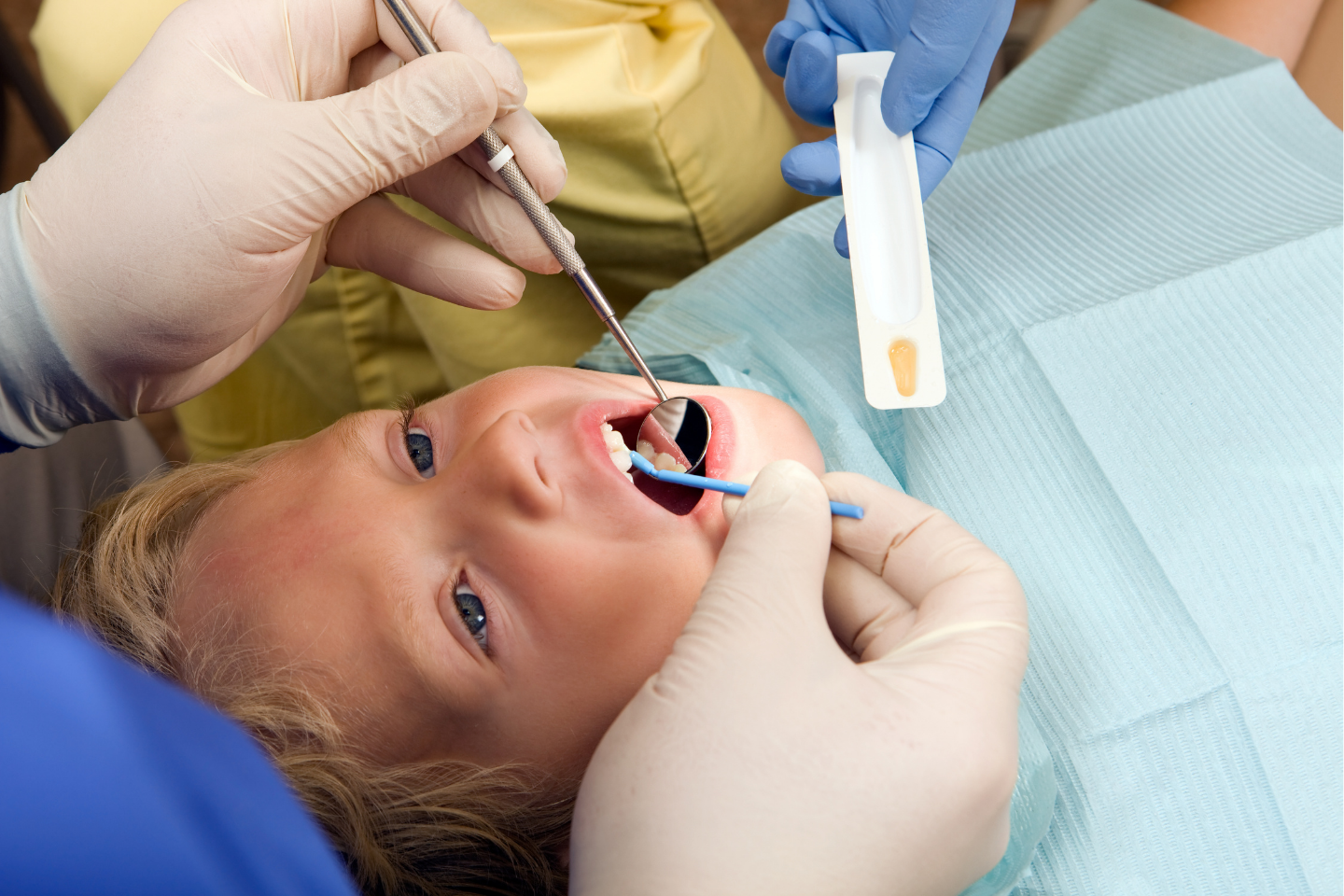
It can be a sinking feeling for any parent to look into their child's mouth and notice chalky white patches, yellow spots, or a chipped tooth. When you see these signs of wear, your first worry is often that your child's tooth enamel is permanently ruined
Because tooth enamel is the hardest substance in the human body, it is easy to assume it can handle anything. However, a child's developing teeth are actually much thinner and more fragile than adult teeth, making them highly vulnerable to wear and decay.
At Polished Pediatric Dentistry, we hear this question all the time: Can my child's enamel be put back or fixed?
The answer depends entirely on how far the damage has gone. While you cannot grow brand-new enamel once it has completely worn away, you can absolutely strengthen and repair weakened enamel before it turns into a cavity. Let us look at how enamel health works in growing mouths and what can be done to protect your child's smile.
The Difference Between Weakened Enamel and Lost Enamel
To understand how to help your child's teeth, it helps to look at enamel as a shield made of packed minerals. Enamel does not contain any living cells. Because it is non-living, your child's body cannot regenerate or grow new enamel to replace what is lost, the same way their body grows new skin or heals a broken bone.
However, enamel damage happens in two distinct phases:
Phase 1: Weakened Enamel (Demineralization)
Every single day, a constant tug-of-war happens inside your child's mouth. When your child eats snacks, the natural bacteria in their mouth feed on the leftover sugars and create mild acids. These acids strip away vital minerals from the tooth's surface. This early stage shows up as dull, chalky white spots on the teeth.
Can it be restored? Yes! At this early stage, the structural shield is still intact—it is just depleted of its minerals. By delivering the right nutrients back to the tooth, you can reverse the damage and harden the enamel again. This process is called remineralization.
Phase 2: Lost Enamel (Decay)
If the acid attacks continue without intervention, the chalky white spots will crumble, breaking open the surface structure. Once a physical hole, dip, or cavity forms in the tooth, the enamel is officially gone.
Can it be restored? No, not naturally. Once a cavity forms, no amount of brushing or lifestyle changes will grow that enamel back. The only way to restore the tooth's shape, function, and health is through a professional clinical restoration, such as a tooth-colored pediatric filling or a protective dental crown.
How to Remineralize and Strengthen Your Child's Enamel at Home
If your child's teeth are showing early signs of mineral loss, you can help jumpstart the natural repair process right from your own kitchen and bathroom.
1. Focus on Mineral-Rich Foods
Your child’s saliva is their mouth’s natural defense system. It carries essential minerals that constantly wash over the teeth to patch up weak spots. You can boost the quality of their saliva by feeding them foods high in calcium and phosphorus, such as:
- Cheese, plain yogurt, and milk.
- Leafy green vegetables.
- Lean proteins, nuts, and seeds.
2. Cut Out the Acid Traps
To give weak enamel a chance to heal, you have to stop the constant acid attacks. Limit your child's access to highly acidic and sugary foods that actively strip minerals away. Watch out for frequent snacking on:
- Juices, sodas, and sports drinks.
- Citrus fruits and sour candies.
- Sticky, starchy snacks like crackers and fruit snacks that glue themselves into the grooves of the teeth for hours.
3. Encourage Plenty of Tap Water
Encourage your child to drink plain water throughout the day, especially after meals. Water washes away loose food particles, neutralizes lingering acids, and keeps saliva production high.
How Our Team Restores and Protects Kids' Teeth
If the enamel damage has progressed past the point of a simple dietary fix, our team at Polished Pediatric Dentistry offers several safe, effective restorative treatments to protect your child's smile.
- Professional Cleanings: Removing hard plaque buildup stops acid production right at the source, giving the surrounding enamel room to breathe and recover.
- Pediatric Dental Sealants: For children with deep, narrow grooves on their back molars, we can brush on a thin, protective plastic coating. This sealant seals out food and bacteria, completely preventing enamel breakdown in the hardest-to-clean spots.
- Tooth-Colored Fillings: If a cavity has already broken through the enamel, we gently clear away the decayed area and rebuild the tooth using a durable, composite resin that blends in seamlessly with their natural smile.
Schedule a Checkup to Protect Their Enamel
The absolute best way to stay ahead of enamel loss is to catch it while it is still in the early, reversible stage. During a routine six-month checkup, our experienced team can spot tiny changes in your child's enamel texture and color long before they ever turn into a painful toothache.
If you have noticed white spots on your child's teeth, or if it has been a while since their last checkup, give Polished Pediatric Dentistry a call today. We are here to help you build a practical plan to keep your child's tooth enamel strong, healthy, and resilient!
FAQs on Tooth Enamel in Kids
Why do some children have weaker tooth enamel than others?
Enamel strength can be influenced by several factors. Some children are genetically predisposed to thinner enamel. Other times, if a child experienced a high fever, severe illness, or nutritional struggles as a baby while their teeth were still forming under the gums, their enamel may emerge weaker or more porous.
Can a child's chipped enamel fix itself over time?
No, a physical chip or break in a tooth cannot repair itself. Because enamel lacks living cells, it cannot grow back to fill in a chip. If your child chips a tooth, please bring them in so we can smooth down the rough edge or patch the spot with a tooth-colored filling material to protect the inner layers from decay.
Does milk really help rebuild a child's tooth enamel?
Yes, milk and other dairy products are excellent for oral health. They are packed with calcium and phosphates, which are the exact building blocks your child's saliva uses to patch up weak spots on their teeth. Drinking milk or eating cheese helps maintain a safe pH balance in the mouth.
How do I know if my child’s enamel is stripping away or if it’s just a stain?
Early enamel erosion typically looks like a chalky, dull white line right along the gumline or across the chewing surfaces. Surface stains from food or drinks are usually yellow, brown, or gray and look smooth. If you are unsure, our team can use specialized diagnostic lights to tell you exactly what is going on.
Are electric toothbrushes better for a child's enamel than manual ones?
Electric toothbrushes are fantastic because they do a highly thorough job of removing sticky plaque without requiring your child to scrub aggressively. In fact, kids who brush too hard with a manual toothbrush can accidentally scratch their enamel and irritate their gums. An electric toothbrush ensures a gentle, uniform clean.
What Is a Sensory Friendly Dental Visit? A Guide for Parents
Curious what a sensory friendly dental visit involves? Learn how a sensory friendly pediatric dentist adjusts sound, light and pacing for a calmer checkup.
Dental Care Tips for Children With ADHD: A Parent Guide
Looking for dental care tips for children with ADHD? Discover practical strategies for brushing, dentist visits, and building calmer oral care routines.

Pacifiers vs Thumb Sucking: When to Stop for Healthy Teeth
Learn when to stop pacifiers vs thumb sucking, how these habits affect teeth and jaw development, and gentle ways to help your child break the habit.