
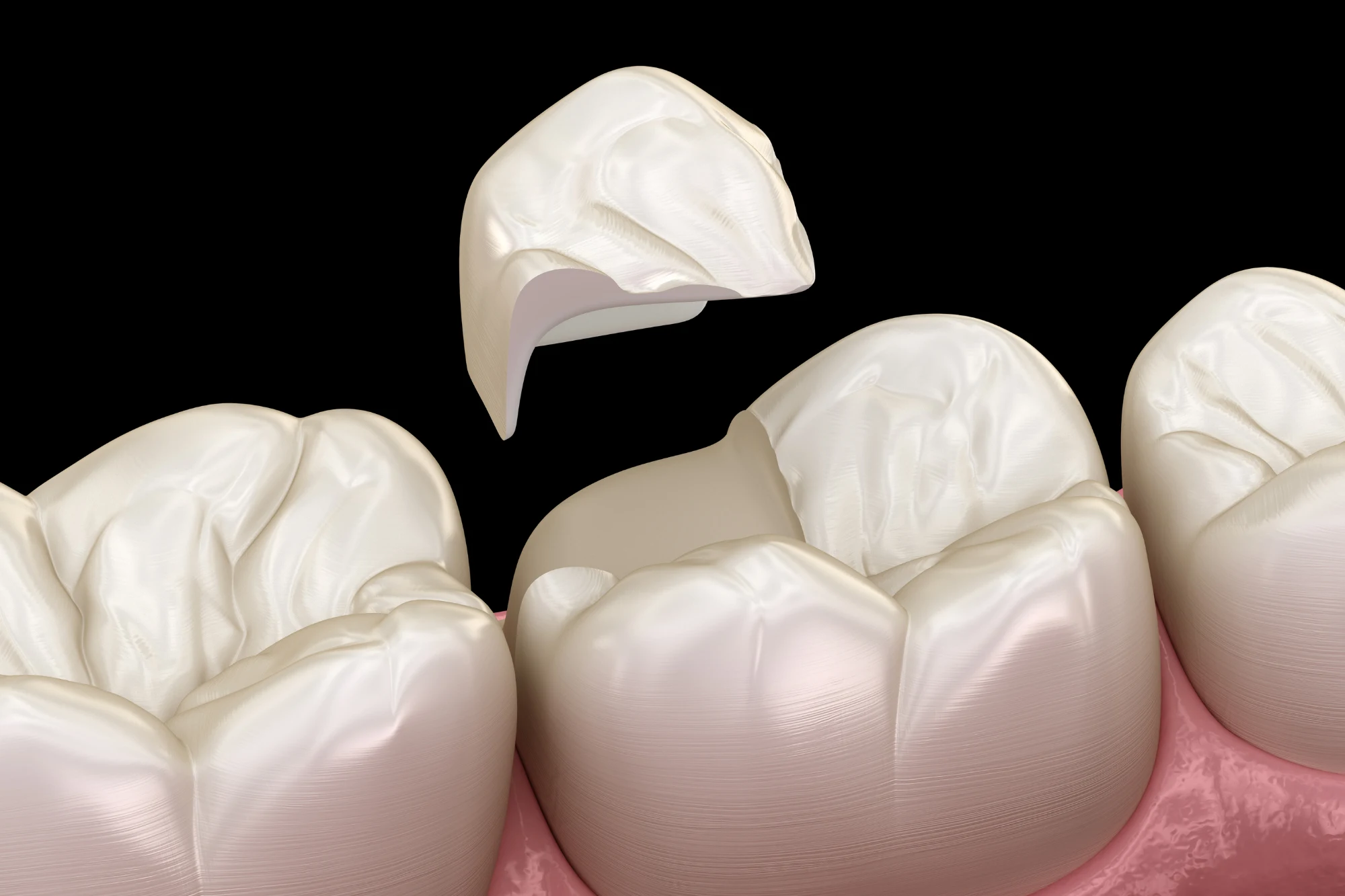
Your child just got dental sealants. Now you are probably wondering how long that protection is actually going to last.
It is a fair question, and if you search around, you will get a few different answers. Cleveland Clinic says about five years. The American Dental Association says sealants can protect teeth for up to ten years with proper care. Neither of those is wrong. They are just describing different ends of the same range.
So let's actually break down what determines where your child's sealants will land in that range, and what you can do about it.
What Are Dental Sealants, Exactly?
Dental sealants are thin, protective coatings applied to the chewing surfaces of the back teeth, the molars and premolars. Those teeth have deep grooves and pits that are genuinely hard for a toothbrush bristle to reach, no matter how well your child brushes.
A sealant fills in those grooves and creates a smooth, easy-to-clean surface. Most sealants are made from one of two materials:
- Resin-based sealants, made from a plant or synthetic composite. These are the most common choice and tend to bond very well.
- Glass ionomer sealants, made from a glass powder combined with a water-soluble acid. These release small amounts of fluoride over time, which some dentists prefer for higher-risk teeth, though they tend to wear faster than resin.
The material your dentist chooses can itself affect how long the sealant lasts, which is one reason the "how long" answer varies from child to child. If you are deciding whether this preventive treatment is right for your child, learn more about when dental sealants are recommended.
So, How Long Do They Actually Last?
Most sealants last somewhere between 3 and 10 years. Here is how a few trusted sources describe it:
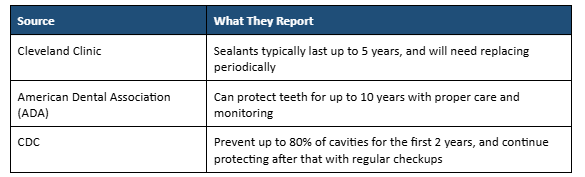
None of these sources actually disagree with each other. They are describing the same treatment under different conditions, a sealant placed on a tooth that takes heavy chewing pressure and belongs to a child who grinds their teeth at night will simply not last as long as one on a lower-pressure tooth with none of those factors.
Here is what actually determines where your child lands in that range:
- The material used for the sealant (resin generally lasts longer than glass ionomer)
- How much chewing pressure that specific tooth takes day to day
- Whether your child grinds or clenches their teeth, especially at night
- Snacking habits, particularly sticky or very hard foods
- How consistent the six-month checkups are, since that is when small chips get caught and repaired before they turn into bigger gaps. Routine pediatric dental cleanings also give your dentist an opportunity to check that sealants are still intact.
Signs a Sealant May Be Wearing Down
You do not need to inspect your child's molars every week. But it helps to know what to watch for between visits:
- A rough or chipped edge your child mentions feeling with their tongue
- A visible pit or dark spot where the sealant used to look smooth and uniform
- Food seeming to get stuck in a spot that never used to trap anything
None of these need to feel alarming. They just mean it is worth having your pediatric dentist take a look at the next visit, or sooner if something feels off.
Can Cavities Still Form Under a Sealant?
Yes, though it is genuinely uncommon. This tends to happen in one of two situations: the sealant was placed over the very earliest stage of decay that was not yet visible to the eye, or the seal develops a small crack over time that lets bacteria back underneath it.
This is exactly why the six-month check matters more than people expect from what sounds like a "set it and forget it" treatment. Catching a hairline crack early is a five-minute repair. Catching it a year later, after decay has had time to work, is a much bigger conversation. If decay is found, your pediatric dentist may recommend composite fillings for children to restore the affected tooth.
Is There BPA in Dental Sealants? Should That Worry You?
This comes up a lot, and it is a fair thing to ask about. Most resin-based sealants do contain a very small amount of BPA. According to the American Dental Association, the amount of BPA exposure from a sealant is smaller than what you would get from touching a printed receipt or using certain cosmetics.
If you are still uneasy about it, ask your dentist about BPA-free sealant materials directly. It is a completely reasonable question, and a good pediatric office should be able to walk you through the options without making you feel like you are overreacting.
The Honest Downsides of Sealants
Sealants are one of the most effective preventive tools in pediatric dentistry, but they are not flawless. Worth knowing before your child's appointment:
- They are not permanent. Plan on a check at every six-month visit, and an eventual replacement somewhere down the line.
- They cannot be placed over a tooth that already has decay or an existing filling. In that case, treatment comes first.
- If a sealant is placed on a tooth that already had undetected early decay, or if it is not applied correctly, it can occasionally trap bacteria underneath rather than keeping it out. This is rare, but it is part of why the follow-up checks matter.
Keeping Sealants Working as Long as Possible
Regular checkups are non-negotiable here. Sealants do not require special home care, but they do require professional monitoring. At every six-month visit, your child's dentist checks each sealant and repairs or replaces it if it is chipped, worn thin, or partially missing.
Beyond that, normal good habits do most of the remaining work: brushing gently but thoroughly with a soft-bristled brush and fluoride toothpaste, and being mindful with very hard foods like ice or hard candy, and very sticky foods like caramel or fruit chews, both of which put unnecessary strain on the edges of a sealant. These habits are all part of a strong preventive dentistry routine that helps lower your child's risk of cavities.
Are Sealants Only for Permanent Teeth?
Usually, yes, but not always. If a child's baby teeth have deep grooves and a high risk of decay, a dentist may recommend sealing those too, simply to protect them until the permanent teeth come in and take over. The recommendation always comes down to a risk assessment specific to your child, not a blanket rule.
Does Getting a Sealant Hurt?
No. It is one of the easiest, fastest procedures in pediatric dentistry, and there is no drilling, no shots, and no removal of tooth structure involved. The tooth is cleaned, a conditioning gel is applied for a few seconds and rinsed off, and the sealant material is painted onto the grooves and hardened with a curing light. Most kids describe it as just having their teeth painted, and the entire process takes just a few minutes per tooth. For children who feel especially nervous about dental treatment, your dentist can discuss whether sedation dentistry is appropriate for their needs.
A Quick Note on the "3-3-3 Rule"
You may have come across this phrase while researching sealants or general kids' dental care. There is no single official definition, different offices use it to describe slightly different habits, usually some version of brushing for 3 minutes, a few times a day, with a few hours of spacing between snacks. If you have heard a specific version of it, ask your pediatric dentist which habits they specifically recommend for your child.
Final Thoughts
Sealants are not a one-time fix. They are a long-term tool that works best paired with regular monitoring, and the honest range you'll see quoted (3 to 10 years) reflects real differences in materials, habits, and follow-up care, not inconsistent advice.
If it has been a while since your child's last checkup in Marlboro, NJ, that is a good place to start.
FAQs on How Long Dental Sealants Last
At what age should my child get dental sealants?
Usually as soon as the permanent molars erupt, generally between ages 6 and 14. The first set (the "six-year molars") typically comes in around age 6, and the second set around age 12. Sealing them soon after they erupt gives the best protection from the start.
Are dental sealants safe?
Yes. They have been used in dentistry for decades and are considered safe by the ADA, the CDC, and pediatric dental organizations. The trace amount of BPA in most resin sealants is well below levels considered a health concern.
What are the downsides of sealants?
They are not permanent, they need monitoring every six months, and in rare cases decay can still form underneath if the seal cracks or was placed over undetected early decay. None of this makes them a bad option, it just means they are a tool that works best with regular follow-up, not a guarantee on their own.
Do sealants hurt to apply?
No. The process is painless and non-invasive, and takes just a few minutes per tooth with no drilling or anesthesia required.
Does insurance cover dental sealants?
Many plans do, since sealants are classified as preventive care for children. Coverage varies by plan, so it is worth a quick call to your insurer or asking our office to check your specific benefits before the visit.

What Is a Sensory Friendly Dental Visit? A Guide for Parents
Curious what a sensory friendly dental visit involves? Learn how a sensory friendly pediatric dentist adjusts sound, light and pacing for a calmer checkup.
Dental Care Tips for Children With ADHD: A Parent Guide
Looking for dental care tips for children with ADHD? Discover practical strategies for brushing, dentist visits, and building calmer oral care routines.

Pacifiers vs Thumb Sucking: When to Stop for Healthy Teeth
Learn when to stop pacifiers vs thumb sucking, how these habits affect teeth and jaw development, and gentle ways to help your child break the habit.